


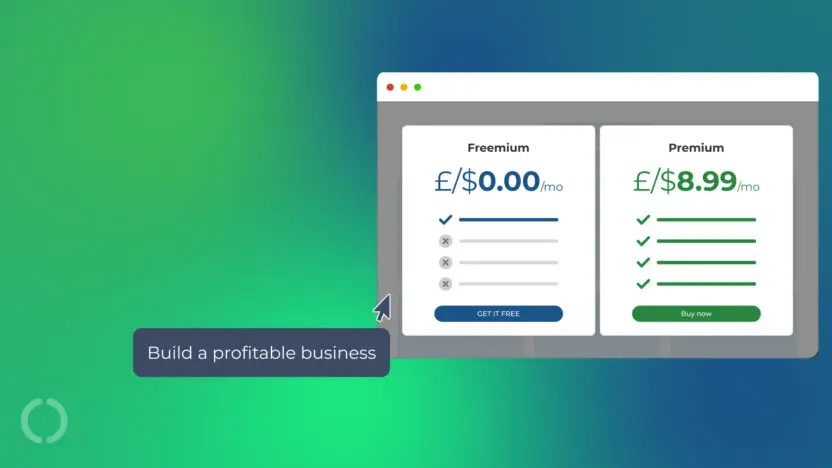
Choosing the right pricing model makes all the difference when building a profitable reseller hosting business.
Some web hosts use a “freemium” approach, offering free services to attract customers before charging for additional features or resources.
Others will take a premium approach, focusing on paid hosting packages that generate recurring revenue from day one.
Both models offer opportunities to attract customers and grow business, but each comes with its own costs, challenges and long-term considerations.
Below, we’ll explain the advantages and disadvantages of freemium and premium pricing to help you find the right fit for your customers and growth goals.
What is the freemium pricing model?
The freemium pricing model is about attracting new customers without asking them to spend a penny upfront.
Freemium combines free entry-level hosting with paid upgrades. Customers get a taste of your service at no cost, while those who need more can pay for additional storage, better performance, extra features or premium support.
For a reseller hosting business, this is a great way to get your foot in the door with potential customers.
A free hosting plan appeals to startups and small businesses that aren’t ready to invest in hosting just yet. As their websites grow, there’s opportunity to move them onto a paid package or cross-sell new features.
But free customers aren’t necessarily profitable customers.
Every account uses server resources, and some customers, particularly less technical customers on free plans, will need support even if they’re not paying.
➡️ The result: if too few customers upgrade, the costs of running your free offering can quickly eat into your margins.
To make freemium work, you need to strike the right balance. Offer enough value to attract sign-ups, while giving customers a clear reason to upgrade when they’re ready for more.
Pros: Low barrier to entry, wider audience, opportunities to upsell.
Cons: Free users consume resources, conversion isn’t guaranteed and support costs can outweigh revenue.
What is the premium pricing model?
With a premium model, customers pay for their hosting from day one.
Rather than offering a free plan and hoping users upgrade, you focus on delivering a service that customers are happy to pay for.
For a reseller hosting businesses, this means offering monthly or annual subscriptions, with different packages to suit different needs and budgets. Read our post on how to price your plans for maximum profit here.
Entry-level plans cover the essentials, while higher-tier packages include more resources, managed hosting, enhanced performance, automated backups and technical support.
The biggest advantage? More predictable recurring revenue.
With paying customers from the outset, it’s easier to forecast income, manage operating costs and understand your profit margins.
However, customers need a compelling reason to choose your hosting over cheaper alternatives. Without a free option to draw them in, you need to demonstrate what sets your offering apart, whether that’s:
- Performance
- Reliability
- Support
- Or the overall customer experience.
Premium pricing can mean a slower start, but it gives you a clearer path to building a sustainable hosting business around paying customers.
Pros: Predictable revenue, clearer profit margins and customers willing to pay for quality.
Cons: Higher barrier to entry, greater need to demonstrate value and potentially slower customer acquisition.
| Freemium | Premium | |
| Customer acquisition | Easier initial sign-ups | Requires stronger value proposition |
| Revenue | Dependant on upgrades | Revenue from day one |
| Running costs | Free users add overhead | Paying customers help cover costs |
| Growth | Potentially rapid growth | More revenue-focused growth |
| Customer retention | Free users less likely to commit | Depends on service quality and value |
| Profitability | Relies on conversion rate | Relies on pricing and margins |
Which model is more profitable for Resellers?
A large customer base might look impressive, but it’s not the same as a profitable business.
Look beyond sign-up numbers and consider how much each customer costs to serve and how much revenue they generate. You’ll need enough paying customers to cover these expenses and leave a healthy margin.
Your main costs will include:
- Hosting infrastructure
- Customer support
- Billing software
- Account management
- Marketing
Let’s look at a simple example 👉
If you attract 100 customers with a free hosting plan and just 5% upgrade to a £10 monthly package, that’s £50 in monthly revenue from five paying customers.
The remaining 95 customers still use resources, and some may need support.
Now imagine you have 100 customers on a £10 monthly plan. That’s £1,000 in monthly revenue, giving you a much larger pool of income to cover your operating costs.
Note: These figures are illustrative and actual profitability depends on your costs, pricing and customer needs.
The bottom line: revenue per customer, conversion rates and operating costs matter far more than sign-up numbers alone.
Whichever model you choose, make sure your pricing supports sustainable growth rather than simply attracting more customers.
The hybrid pricing model
The good news: you don’t have to choose between free hosting and premium subscriptions.
A hybrid pricing model gives you the flexibility to combine the best of both, attracting new customers while building a reliable source of recurring revenue.
There are several ways to make this work for your reseller hosting business:
➡️ Offer free trials: Let potential customers experience your hosting before committing to a paid plan.
➡️ Use introductory offers: Give new customers a discounted first few months rather than providing hosting for free indefinitely.
➡️ Create tiered packages: Allow customers to start with an affordable entry-level plan and upgrade as their websites and businesses grow.
➡️ Sell additional services: Generate extra revenue through website maintenance, security services, backups and performance optimisation.
The advantage is flexibility. Customers can try your service or start with a smaller commitment, while you avoid taking on the ongoing costs of supporting large numbers of free accounts.
A hybrid model won’t guarantee profitability, but it can offer a practical middle ground for resellers looking to attract new customers without compromising long-term revenue.
Make it easy for customers to get started, with a clear path towards becoming a paying customer.
How do I choose the right pricing model for my reseller business?
Before settling on freemium, premium or a hybrid approach, take the time to work through the following checklist:
- Know your audience: Are you targeting beginners, small businesses, web agencies or ecommerce stores? What are they willing to pay for?
- Calculate your margins: Can you cover hosting infrastructure, software, billing and customer support costs at each price point?
- Understand your value: What makes your service worth paying for? Consider performance, reliability, convenience and hands-on support.
- Plan for scalability: Will your pricing remain profitable as your customer base grows and resource usage increases?
- Build in upselling opportunities: Can customers easily upgrade to higher-value packages or add services as their needs evolve?
You don’t need to get everything perfect from day one.
Start with a model that makes commercial sense, monitor your costs and customer behaviour, and adjust your pricing as your business grows.
To conclude
With 20i, you can create your own hosting packages and set your own prices, with white-label StackCP giving customers a branded experience. HostShop helps automate sales and billing, while autoscaling infrastructure supports changing customer demand as your business grows.
With no per-account cPanel licensing fees, plus performance features and WordPress tools to help you stand out, you can focus on building a sustainable business around your customers’ needs.
Ready to grow your hosting business? Explore 20i Reseller Hosting.