


Welcome to Link Round-Up, our series where we share the interesting, useful and fun things on the web that grab our attention.
This time we’re looking beneath the surface of familiar software, meeting some ambitious open-source projects and discovering why supermarket fridges have become a cybersecurity story. There’s also an entire planet to explore, followed by projects for anyone who takes their pixels seriously.
Ever spotted a feature in an app and wondered how on earth it works?

REA (Reverse Engineer Anything) gives AI coding agents the tools to find out. It connects through the Model Context Protocol (MCP), letting an agent inspect JavaScript, Electron applications and native binaries, trace the relevant code and explain its findings with supporting evidence.
For deeper native analysis, REA can work with Ghidra, Hopper or IDA. JavaScript inspection doesn’t need a native decompiler.
There’s plenty of appeal here for developers working on interoperability, software preservation or applications they’re authorised to examine.
Reverse engineering still takes judgement, but better detective tools certainly help.
Of course, once you’ve spent enough time examining familiar software, you might start thinking about building an alternative. That’s what makes the Craft Apps such an interesting find.
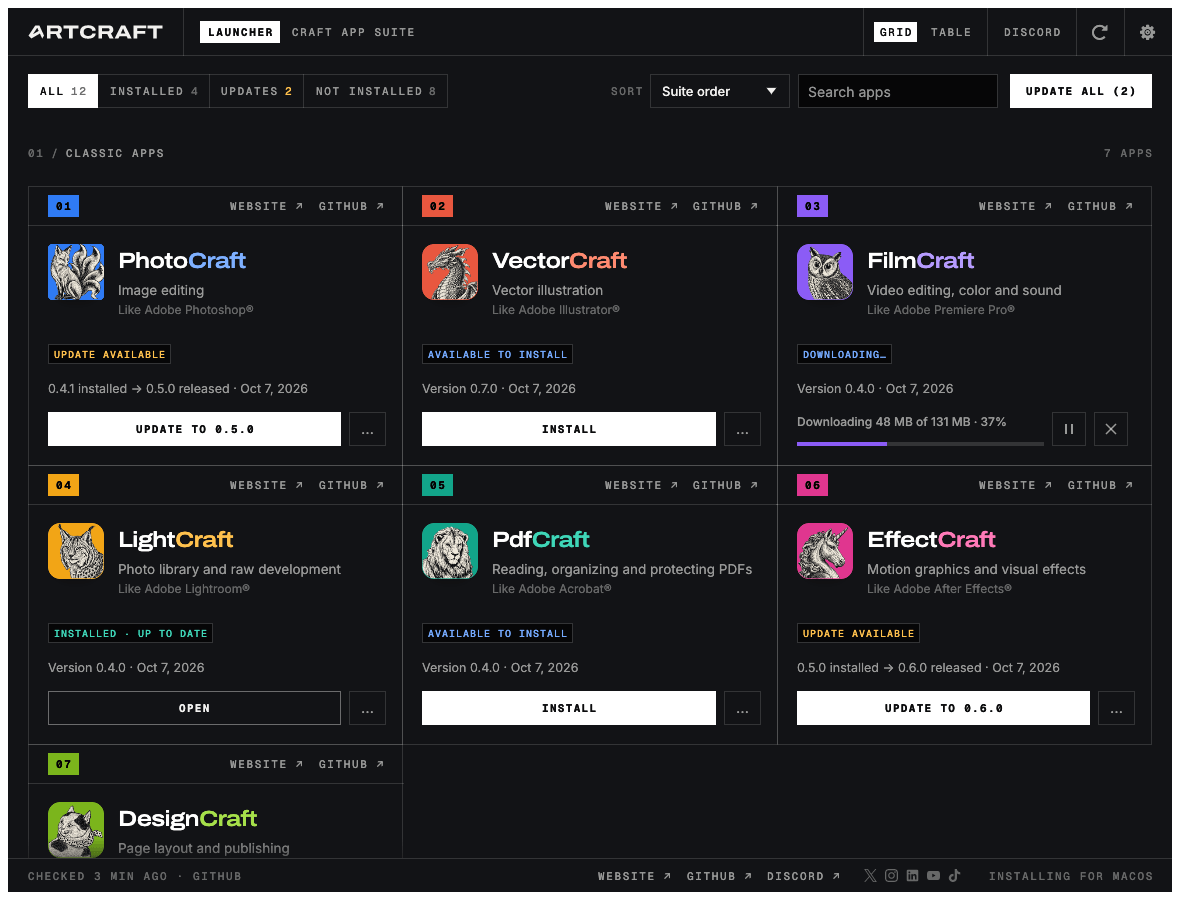
PhotoCraft tackles image editing, LightCraft handles photo libraries and RAW development, FilmCraft takes on video editing and VectorCraft covers illustration.
The intent, interfaces and shortcuts are deliberately familiar and they’re part of a much larger suite of free, open-source apps built in Rust.
Getting setup is really easy: ArtCraft Launcher handles finding the right builds for your system, installing the apps and keeping them updated.
The versions I tried were punchy, intuitive and were stable on my M4 MacBook Air (Golden Gate 27.0.1), but plenty of other users report friction. YMWV.
This isn’t a big shock as some apps are in early alpha at best at the time of writing, so don’t go betting a deadline on them. Nevertheless, as an open-source alternative taking shape, it’s one to watch.
Building software, keeping it useful, secure and maintained over the years is a challenge. That’s why Anthropic’s Claude for Open Source programme is worth a look. No affiliation.
Qualifying contributors can apply for six months of Claude Max 20x at no cost. The criteria cover maintainers of widely used packages, core contributors, people regularly contributing to other repositories and those building active open-source communities.
Anthropic also encourages applications from maintainers of less obvious but important infrastructure. If that’s you, have a look at the eligibility criteria. Just note that existing paid subscriptions resume after the complimentary period unless cancelled.
Maintaining a project also gets easier when everyone agrees on what its parts are and how they relate to each other.
Microsoft’s Ontology Playground is a free, open-source tool for modelling the things within a system and the relationships between them. For an ecommerce platform, think customers, products and orders, with clearly defined properties and connections (rather than assumptions) buried across a dozen documents.
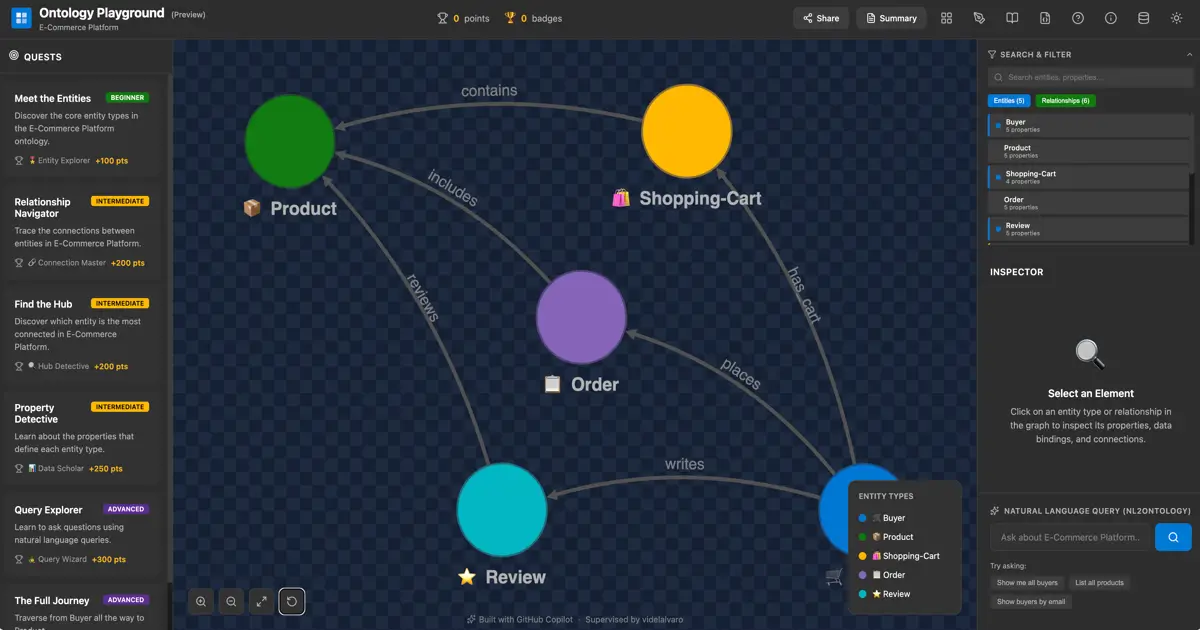
You can explore example models, build your own in a visual editor and export them as RDF/XML. There’s a live playground too, so you don’t need to set anything up to experiment.
If different teams keep using the same term to mean different things, a shared model can make those disagreements visible before they become expensive.
Understanding how systems connect is useful and understanding who can remotely control them is critical.
A recent cyberattack on French supermarket refrigeration systems affected hundreds of stores in October, with cooling equipment manipulated, temperatures reportedly reaching 50°C and large quantities of food spoiled.

France’s CERT-FR alert identifies compromises involving Danfoss, Copeland and Dixell refrigeration controllers. Its advice includes removing management interfaces from direct internet exposure, reviewing defrost configurations, updating firmware and allowing remote access only through a secure VPN or protected network.
Similar attacks have since been reported in Belgium, Luxembourg, Sweden and Estonia.
These attacks are powerful examples which illustrates that ‘business-critical infrastructure’ isn’t limited to servers, websites and email.
An exponentially more enjoyable way to explore connected systems is gods-eye-view.
The idea is public information gets pulled together and displayed onto an interactive 3D globe that looks like something out of a sci-fi film.
Aircraft, satellites, ships, earthquakes, public cameras and more appear as geographic layers, giving you a different perspective on the activity and infrastructure around a city, or across the planet. Not every feed has the same coverage or update frequency, but there’s a lot to explore.
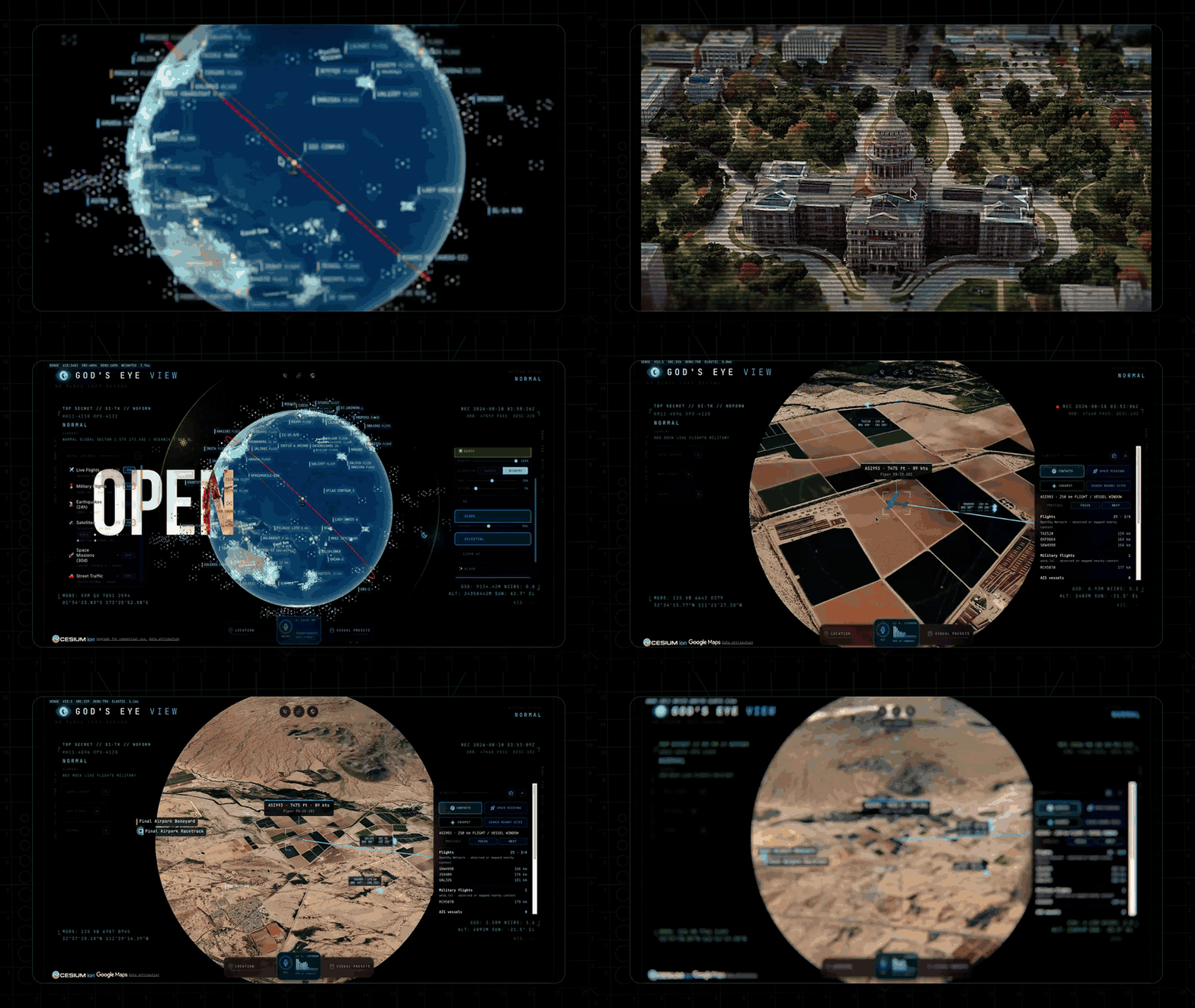
The project is open source and runs locally, with many layers available without API keys. Some extras have conditions: AI voice uses a metered API, while photorealistic 3D imagery can use a Cesium ion account subject to eligibility, non-commercial use and quotas, or a metered Google Maps key.
If you’re thinking of using the data commercially, check the dataset licences. Open-source code doesn’t automatically mean every data layer is free to reuse.
When you’re done looking at a digital version of the planet from high above, why not zoom all the way in and focus on the pixels?
Spektrafilm OFX is a free OpenFX plugin for applications such as DaVinci Resolve that takes film emulation rather more seriously than simply applying a colour LUT.
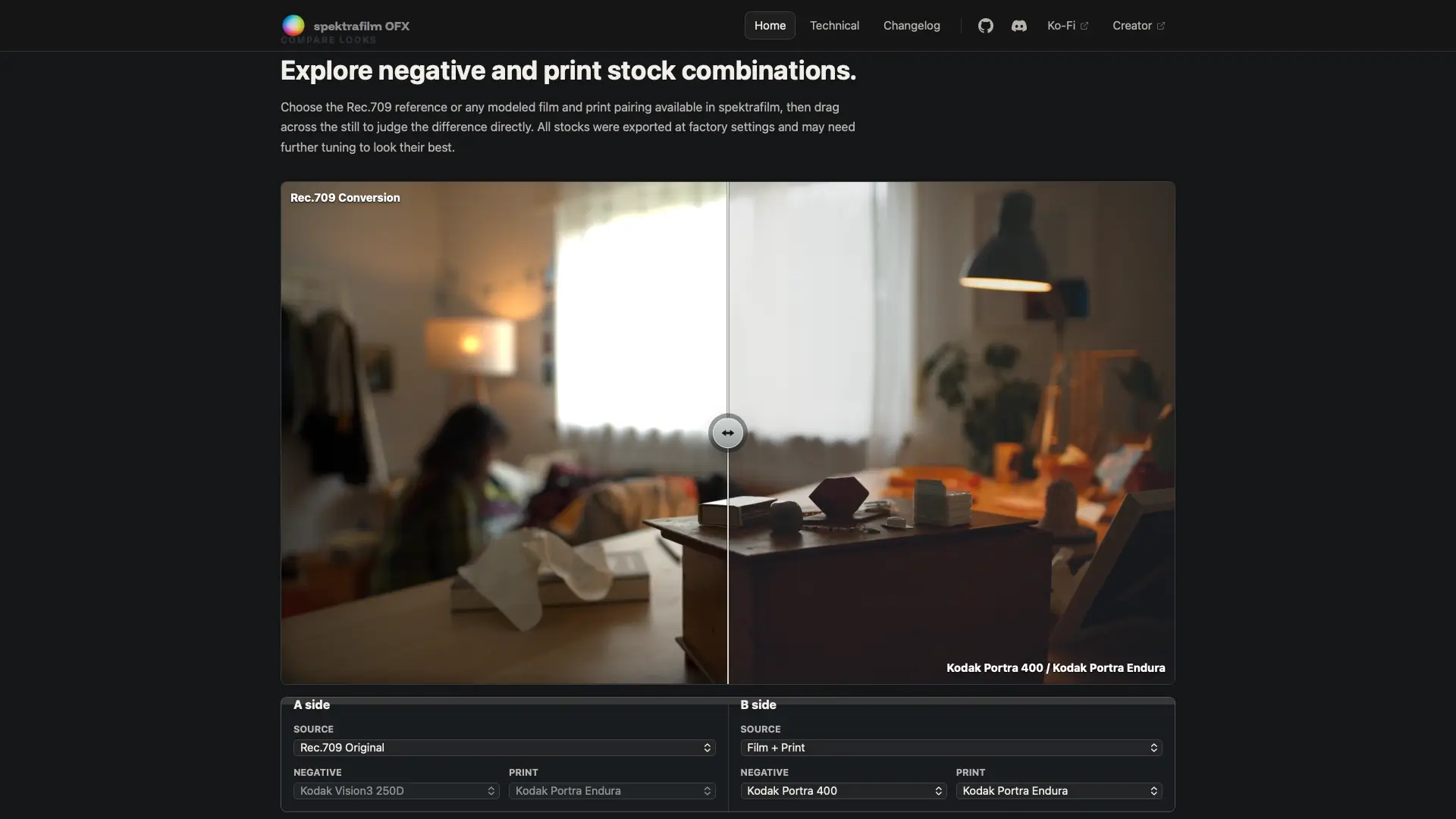
It uses spectral sensitivity and density data to model how light exposes film, then simulates negative development, printing and scanning. You can experiment with film and print stocks, grain, halation, diffusion and highlight behaviour, with SDR and HDR output options.
The results on the website are worth a look, particularly if you work with video or colour grading. Bear in mind that the downloads for macOS, Windows and Linux are still labelled beta, so exercise appropriate caution before integrating spektrafilm fully into your workflow.
If your idea of pixel perfection involves Unreal Engine rather than digital film simulation, Ultra+ might occupy the rest of your day.
This free community project develops mods for supported PC games, hooking into rendering systems to adjust lighting, reflections, draw distances and ray tracing in real time. It also tackles visual bugs, with the aim of improving the balance between image quality and performance.
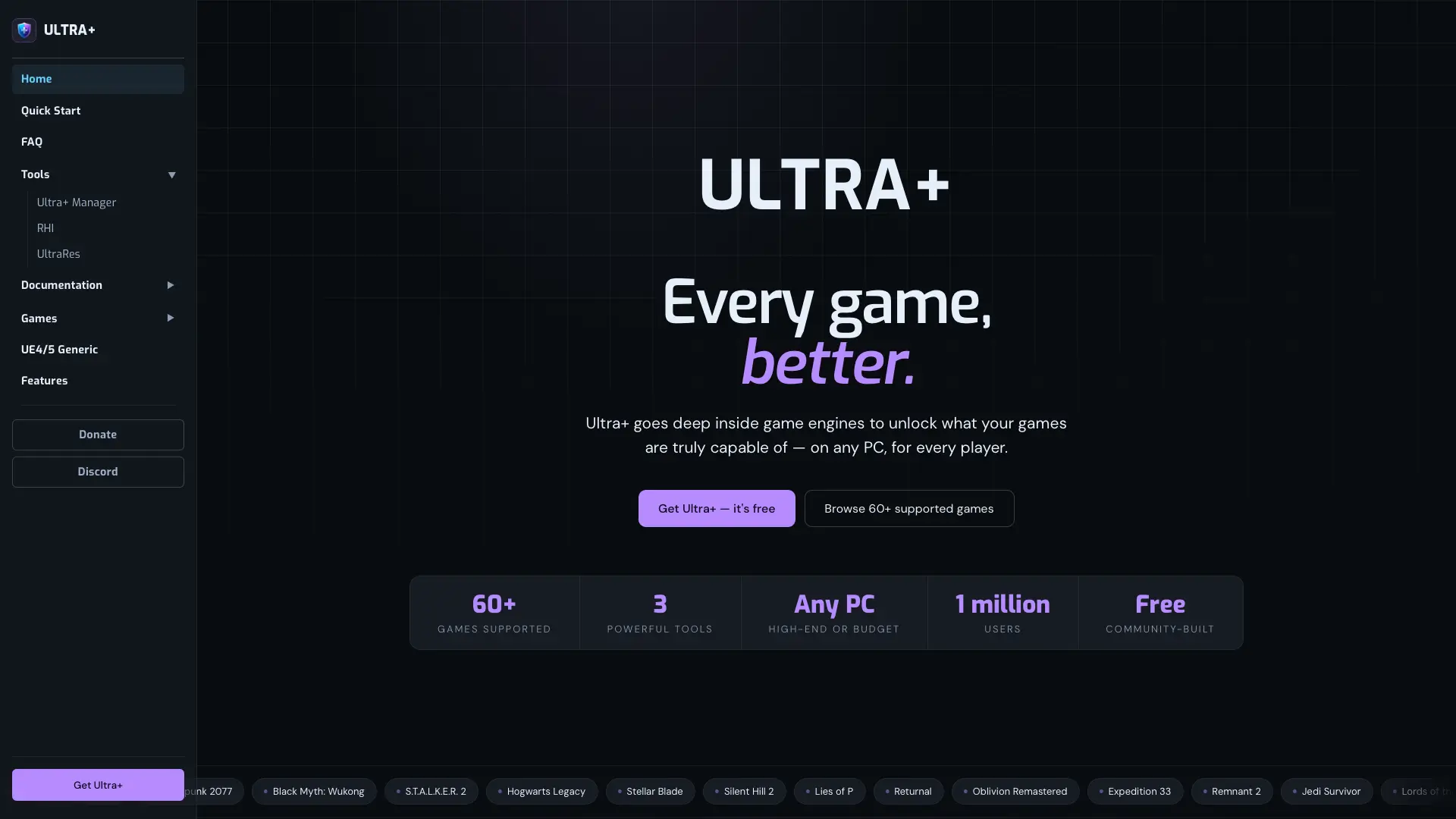
There’s an Ultra+ Manager for installation and updates, but the available changes depend on the game and your hardware. Check the relevant guide for each game before diving in for best results.
The project is unaffiliated with Kohei Horikoshi and ‘Plus Ultra’, but if you’ve ever spent far too long switching between settings and hunting the perfect balance between visual fidelity and frames per second, you’ll find this to be heroic.
Have you found a brilliant tool, fascinating website, impressive open-source project or niche internet rabbit hole we should include next time? Let us know in the comments!
