



GitHub has been the default home of software development for so long that Git and GitHub have become almost interchangeable for a lot of people.
Being able to clone, fork, branch, merge and collaborate combined with pull requests, issue tracking, project discovery, CI/CD workflows and access to a huge community makes it an incredibly powerful solution for developers.
Recently however, the mood around GitHub has shifted.
Users are raising concerns about downtime, AI integration, Copilot promotion, changing pricing structures, Microsoft’s influence and the growing feeling that GitHub is being optimised around corporate priorities rather than everyday developer experience.
The question now is: Should one company have this much control over open-source software?
Why Developers Are Reconsidering GitHub
Microsoft’s decision to fully absorb GitHub into its AI empire marks the end of any pretense of independence, neutrality, or respect for the developer community.
Dion Wiggins – CTO at Omniscien Technologies
GitHub’s greatest strength is its scale.
It’s where projects are discovered, issues are discussed, pull requests are reviewed and open-source communities gather. For many developers, having a GitHub profile is as important as having a CV.
The ubiquity and dominance of GitHub comes with risk: When GitHub has an outage, projects stall.
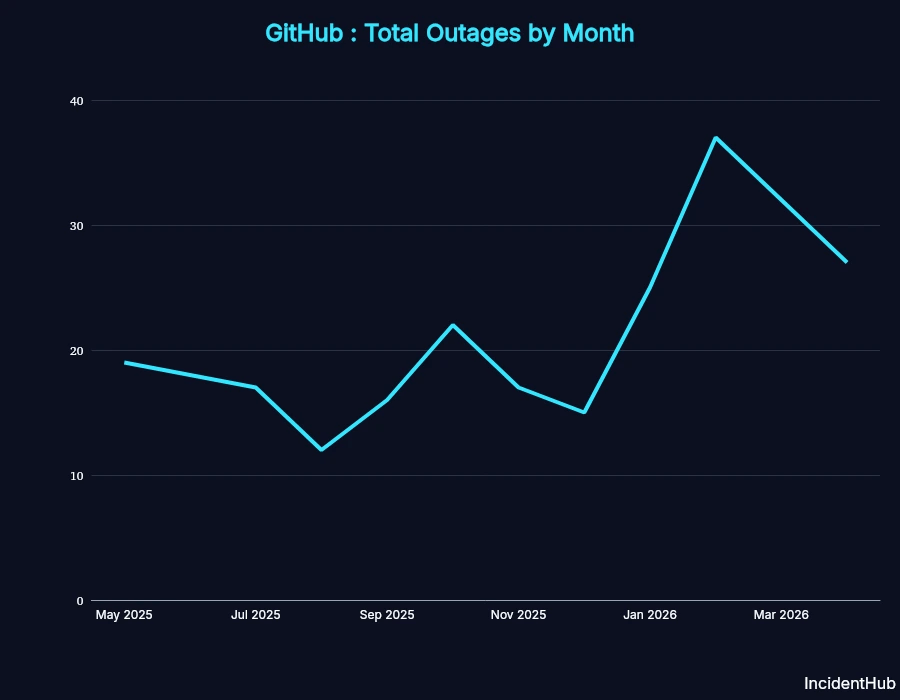
By Hrishikesh Barua, Founder of IncidentHub
When GitHub changes pricing, teams have to recalculate workflows they thought they understood.
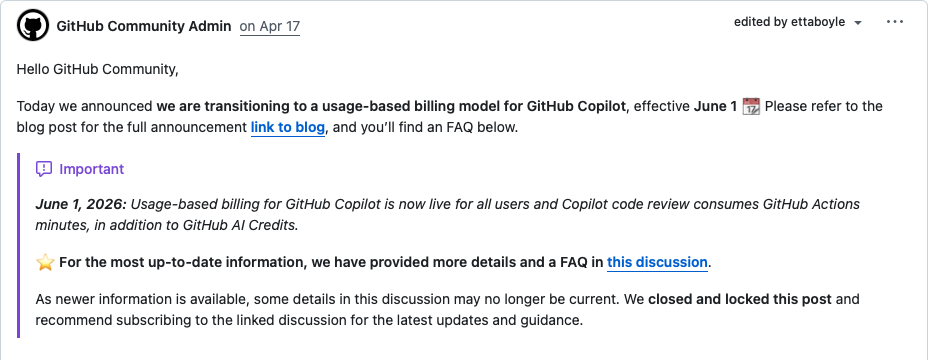
When GitHub pushes AI deeper into the platform, developers question what happens to the code, documentation and collaboration habits they have spent years building.
All of this has led to a growing interest in open-source and self-hostable alternatives that put control back into the hands of developers and are often less expensive.
GitHub Pain Points
Before moving your repositories, ask what you are trying to get away from.
- Is the problem GitHub itself?
- Is it GitHub Actions?
- Is it Copilot?
- Is it Microsoft ownership?
- Is it AI training?
- Is it pricing uncertainty?
- Is it the feeling that a developer-first platform is becoming harder to trust?
Your answer matters because GitHub alternatives solve these problems differently. The key to a successful migration is to choose the route that matches the problem you are trying to solve.
The Self-Hosted Route
For developers who want the cleanest break from GitHub, self-hosting is the most direct answer.
Self-hosting gives you control over where your repositories live, how your Git platform is configured, who can access it, what integrations you use and how much of your development workflow depends on someone else’s platform decisions.
Two options that offer the familiar Git forge experience developers expect (including repositories, issues, pull requests, collaboration tools and lightweight project management) that live on infrastructure you control are:
Forgejo
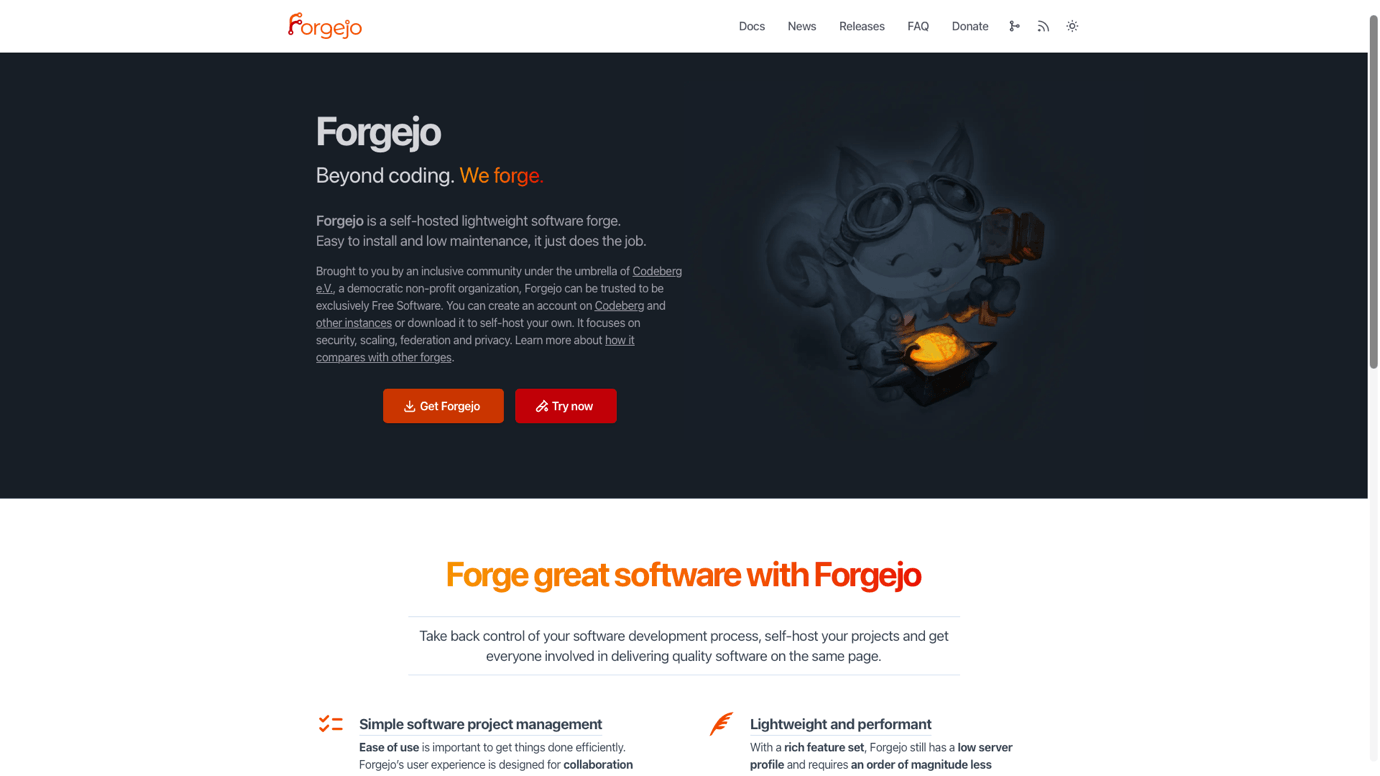
Forgejo is a compelling self-hostable GitHub alternative.
It is lightweight, open-source and built around the idea that software development infrastructure should remain in the hands of the people using it – making it a particularly good fit for current sentiments.
For developers who are frustrated by AI pressure, corporate lock-in, shifting platform rules and the feeling that GitHub is no longer quite theirs, Forgejo offers a practical answer.
It keeps the modern Git forge experience but removes the dependence on GitHub which makes it a powerful proposition for small teams, agencies, open-source maintainers and privacy-conscious developers.
Gitea

We’ve highlighted Gitea before (no affiliation) and it remains one of the most practical GitHub alternatives for developers who want to host their own Git service.
Gitea is lightweight, open-source and designed to be easy to run. It gives you all the essentials: repositories, pull requests, issues, project tools, packages and CI/CD through Gitea Actions.
Its biggest strength is familiarity.
If you like the general GitHub-style workflow but want it on your own infrastructure, Gitea is easy to understand by simply giving users a way to bring that workflow under their own control.
That makes it especially attractive for developers, freelancers and smaller teams who want something capable without the weight of a larger DevOps platform.
Gitea and Forgejo overlap due to their shared history. Your choice will come down to project direction, governance preferences and which community you feel more comfortable backing. Both keep the core promise intact: Your code. Your rules.
The Hosted Open-Source Route
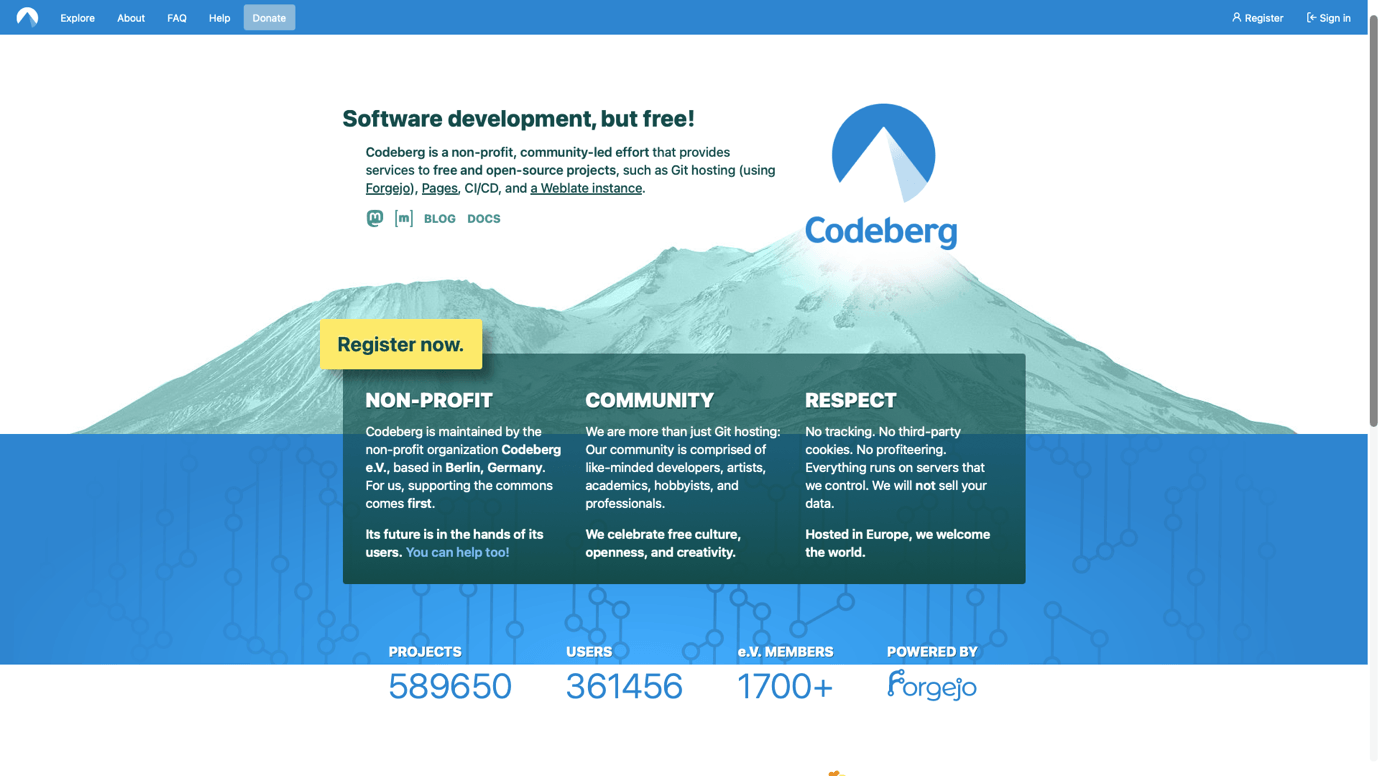
Self-hosting isn’t for everyone. Running your own Git platform gives you control and makes you responsible for updates, backups, uptime, security and ongoing maintenance.
Codeberg gives open-source projects a hosted alternative with a strong community ethos, which is appealing for developers who want to move away from GitHub, but don’t want to turn code hosting into another infrastructure job.
While not as glossy as other enterprise DevOps platforms, Codeberg provides a home for open collaboration with values that feel closer to the open-source communities GitHub originally attracted.
The Full DevOps Route

GitLab remains one of the most complete GitHub alternatives, especially for businesses.
It offers source code management, CI/CD, planning, security features and a broader DevOps platform in one place. It can also be self-managed, which makes it attractive for organisations that want more control without piecing together lots of separate tools.
GitLab is powerful, but it can also feel heavy. Some developers looking to escape platform bloat, AI pressure or corporate dependency may find that GitLab solves one problem while introducing another.
For larger teams that want a serious, full-featured DevOps platform, GitLab may be the most practical migration path thanks to its maturity, name recognition and commercial focus.
The Minimalist Route

Not every GitHub alternative tries to look like GitHub.
Sourcehut takes a much more minimalist approach. It’s built around open-source tools for project maintainers and collaborators, including Git hosting, mailing lists, bug tracking and continuous integration.
It is fast, plain and deliberately unflashy – as are many of the websites that changed the internet forever.
There is no advertising, no noisy social layer, no AI assistant trying to insert itself into your workflow. Its tools work without JavaScript and its approach feels much closer to traditional open-source development.
SourceHut is not trying to be the next GitHub, which is an approach that will not suit every team. Developers who are used to pull requests and visual dashboards may find it unusual at first.
The email-driven workflows, clean interfaces and standards-based tools will appeal to maintainers in a reminder to us all that collaborative software development doesn’t have to look like GitHub at all.
The Wider Git Hosting Landscape
Git’s own hosting tools page points to even more options:
- Radicle takes the decentralised route, appealing to developers who want to reduce dependence on central platforms altogether.
- Gerrit is more focused on code review workflows and is well suited to larger engineering environments.
- Azure Repos is a low-friction option for teams already invested in Microsoft’s developer ecosystem.
- Tangled is another newer entrant exploring what collaborative software development can look like outside the usual GitHub-shaped model.
Every alternative we’ve highlighted so far has different priorities which appeal to different types of users. Here’s our advice to help you overcome option paralysis:
The best GitHub alternative is the one that matches what you are trying to regain: control, privacy, simplicity, community ownership, CI/CD flexibility, discoverability or enterprise-grade governance.
The Discoverability Trade-Off
One reason developers stay on GitHub even when they dislike its direction is that everyone else is there.
The network effect is real – if you maintain a public project, GitHub gives you visibility, searchability, stars, issue history, contributor familiarity and a place where other developers already have accounts.
Moving away from GitHub means doing more of your own promotion.
Some projects will choose to mirror repositories across multiple platforms. Some will keep GitHub as a public shop window while moving development elsewhere. Others will leave completely and rebuild their contributor community somewhere else.
There is no universal answer, but there is value in remembering that GitHub’s network effect is convenience, not inevitability.
The Hosting Factor
Tools like Forgejo, Gitea and GitLab give you control over the software layer: your repositories, users, permissions, updates, integrations and workflow.
They all need somewhere reliable to run, which is where hosting enters the equation.
A VPS gives developers a practical middle ground. You are not relying on a closed code-hosting platform to make every decision for you, but you are not running your own data centre or colocation operation either.
In other words, you control the Git service while your hosting provider takes care of the infrastructure underneath: hardware, networking, connectivity, uptime and protection against attacks.
Who Controls Your Code?
There is more to the renewed interest in GitHub alternatives than features. Developers don’t leave a platform as large as GitHub because they dislike one button, one pricing change or one new AI prompt.
Looking elsewhere begins when the direction of travel feels wrong.
- Who controls the platform where your code lives?
- Who decides which features appear in your workflow?
- Who benefits from the code and collaboration data hosted there?
- What happens when pricing changes?
- What happens when the platform goes down?
- What happens when the priorities of the company and the priorities of developers no longer feel aligned?
GitHub will still be the right answer for many teams. Its network effect is enormous and visibility matters for public open-source projects.
Thankfully, Git does not depend on GitHub. Repositories can be mirrored, projects can be moved and developers can choose infrastructure that matches their values.
What are your thoughts on GitHub and have you already migrated? Leave a comment and let us know!
