


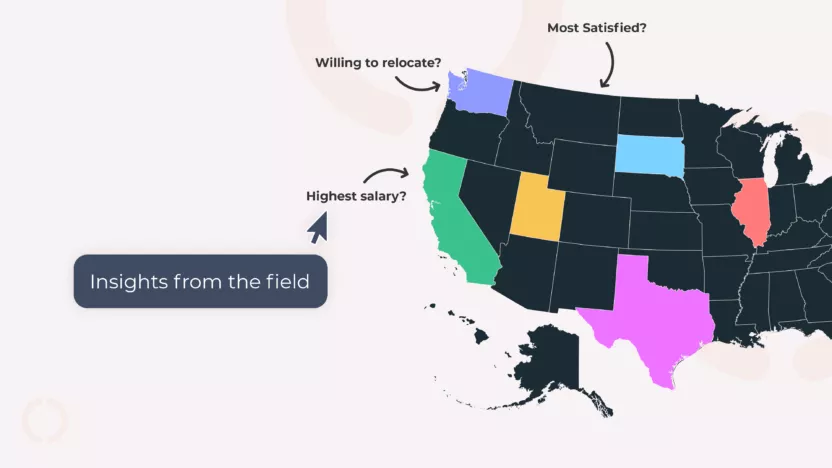
Web designers are operating in a rapidly shifting industry.
To understand how the profession is evolving, we surveyed 500 web designers across the USA, analyzing earnings, workflows, AI impact and regional trends.
- Over 75% say competition from AI has made their job more challenging in the last year
- 3 in 4 say finding new clients has become more difficult in the past year.
- Nearly 80% would move state for a better job opportunity
- Over half report struggling with a lack of clear career progression
- 90% believe that clients underestimate the true cost of web design
Let’s dive in!
Quick links:
- Behind the screens: Who are the web designers?
- How much do web designers earn?
- Remote vs hybrid v office
- Most popular tools and workflows
- How web designers find clients and win projects
- The biggest challenges today
- AI, AR and Automation – the Future
- Comparing the “Big 4” states
- Methodology
Overview
The results show a profitable and adaptable industry, but one facing growing competitive pressure, rising costs and persistent tension between strategic value and price-driven client expectations.
AI: The biggest threat or the biggest shift?
AI dominates concerns for the future, more so than either marketing budget cuts or software costs:
- 76% cite increasing use of AI as their biggest concern.
- Three in four (75%) say AI-driven competition has already impacted them in the last year.
- Designers rank “AI-powered self-design” and “AI-agent dominance” as the top two forces most likely to transform the industry by 2036.
Yet notably, some are seeing the benefits of this development, with almost 10% saying that AI chatbot referrals are now their primary source of new leads.
The pro designer is holding their value
Despite the rise of DIY builders and AI-generated websites, professional web designers are thriving.
- 37% of US web designers earn over $100,000 per year
- 6.4% earn more than $200,000
- 78.6% say they feel properly compensated
There is also a clear “high-earner” segment – largely made up of agency owners and senior in-house designers, earning $200k+ annually.
The ceiling hasn’t dropped. If anything, it’s expanded for those who specialize or build scalable businesses.
➡️ Use our web designer salary calculator to see how you compare to other designers in your state, plus gain insights in to what your customers are prioritizing.
Clients still don’t always ‘get it’
If designers feel well paid, why is there frustration?
Because around nine in ten respondents agree or strongly agree that clients underestimate the true cost of web design.
There’s a clear disconnect between what clients prioritize and what designers know drives long-term success.
Designers believe clients care most about turnaround time (32.4%) and price (26.6%), suggesting that other factors such as UX can fall by the wayside.
The tool stack is evolving
The modern workflow is shifting. 42% rely primarily on design-to-dev handoff tools, with platforms like Figma, Adobe XD and Sketch, which are the industry standard for professional delivery.
However, there’s a significant shift towards visual builders, with 26% moving fully to them, including Webflow and Framer.
Meanwhile, traditional CMS block editors represent just 4.2% of primary workflows.
Designers are prioritizing speed, flexibility and direct-to-launch capability more than ever.
Behind the screens: Who are web designers?
We wanted to understand the people behind web design in the U.S. – where they work, how they work, and what drives their careers.
We aimed to uncover the trends, challenges, and opportunities shaping the next generation of web designers.
Which of the following best describes your primary role in web design work?
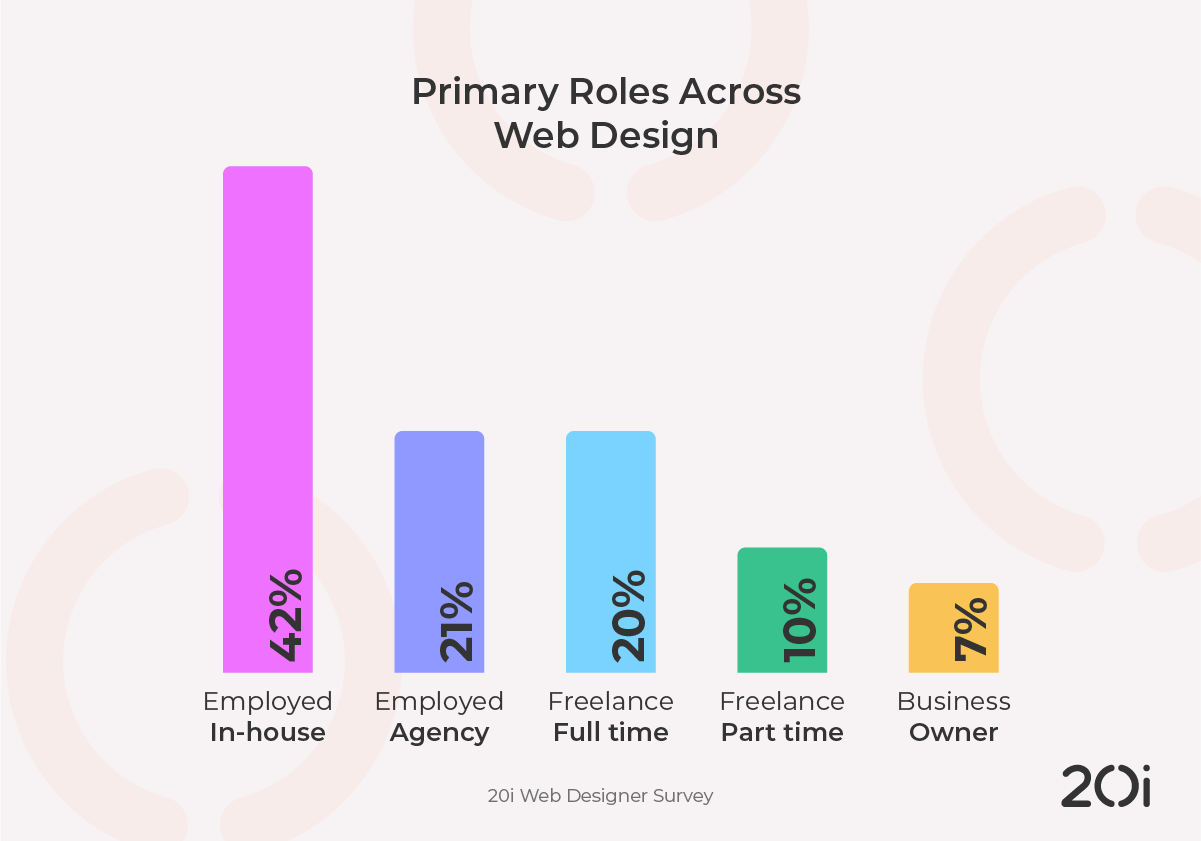
The largest segment of US web designers now work in-house. This reflects the increasing importance of digital experience as a core business function rather than an outsourced service.
- 42% Employed – in-house
- 21% Employed – agency
- 20% Freelance – full-time
- 10% Freelance – part-time
- 7% Business owners
Agency designers still represent a substantial 20.6%, suggesting traditional agency models remain healthy.
Meanwhile, over 30% of respondents operate independently in some capacity (full-time freelance, part-time freelance, or business ownership).
This shows that web design continues to offer strong entrepreneurial pathways, and opportunities as a “side hustle”.
The industry is not dominated by one model, but is structurally diverse, which helps to explain differences in earnings, workflow and time allocation explored later in the survey.
How many years have you worked in web design?
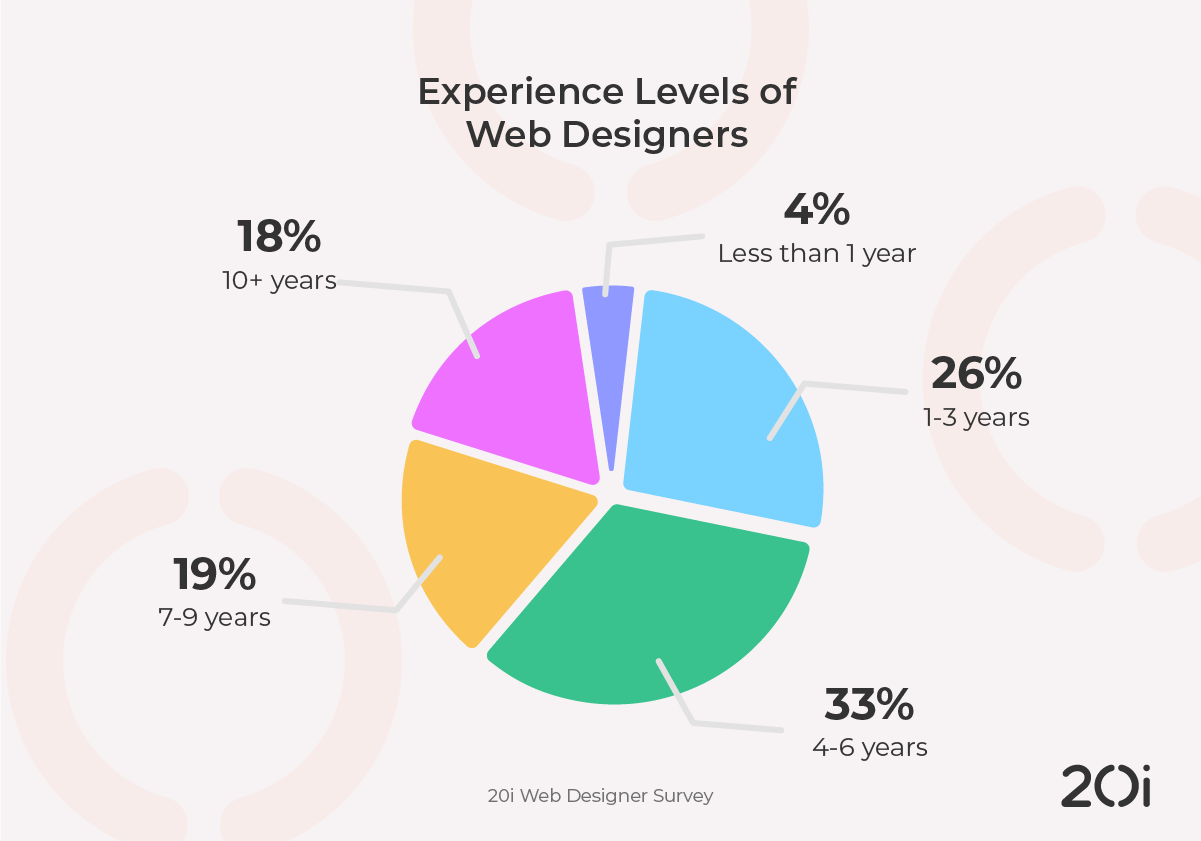
The industry skews towards mid-career professionals. Over half of respondents have between four and nine years of experience – suggesting that the US web design workforce is maturing.
- 33% have 4–6 years experience
- 26% have 1–3 years experience
- 19% have 7–9 years experience
- 18% have 10+ years experience
- 4% less than 1 year experience
Only 4.2% of respondents are new to the industry. This suggests that while web design remains an accessible career path, it is not currently experiencing a surge of first-year entrants.
One possible explanation is broader economic uncertainty, which may be prompting businesses to prioritise experienced, “ready-made” talent over investing time and resources in training newcomers.
Availability of AI may also mean that employers turn to those tools for quick “entry level” tasks, rather than having a dedicated staff member.
The high percentage of designers with over ten years experience (17.6%), also shows longevity in a relatively new profession.
By age
82% of the “Veteran” cohort (aged 45+) have more than 10 years of experience, reinforcing the link between age and tenure in the industry.
Notably, the 1–3 year experience bracket is heavily concentrated among those aged 18–28, suggesting relatively few mid-career entrants and limited evidence of large-scale career switching from older generations.
By state
Florida and New York have the highest concentration of “Expert” designers (10+ years’ experience), indicating well-established creative markets.
In contrast, Texas records the largest share of “Early Career” designers (1–3 years), potentially signaling a significant influx of emerging talent and a rapidly expanding design ecosystem in the state.
How large is your organization?
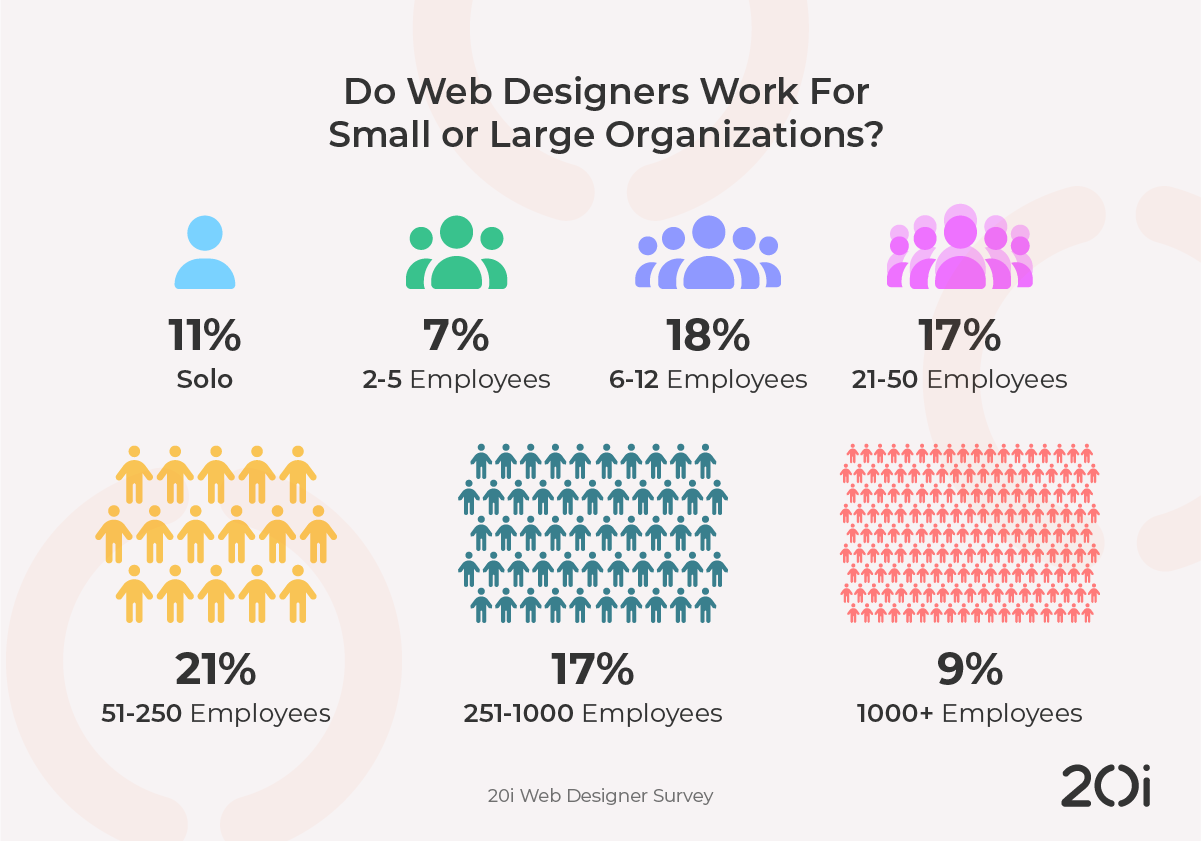
Web design now spans every scale of business.
- 21% work in a company with 51-250 employees
- 18% work in a company with 6-20 employees
- 17% work in a company with 251-1000 employees
- 17% work in a company with 21-50 employees
- 11% work solo/freelance
- 9% work in enterprise companies with 1000+ employees
- 7% work in small businesses with 2-5 employees
While 18% work in organizations with five people or fewer, a significant 47.6%, almost half of those responded, work in companies with over 50 employees.
This reinforces a key shift: web design is no longer confined to creative studios. It is embedded inside mid-sized and enterprise-level companies.
Large companies employ web designers due to web designers ensure consistent branding, UX standards, accessibility compliance and visual identity across all touchpoints.
By age
Designers aged 50+ are three times more likely to work independently or within very small teams (2–5 employees), suggesting a shift toward boutique, specialist, or freelance-led models later in their careers.
By state
California stands out for its concentration of “Big Tech” employers, with 34% of respondents working in organizations of 1,000+ employees, likely due to tech giants in the likes of Silicon Valley.
Meanwhile, Ohio and Pennsylvania emerge as strongholds for mid-sized agencies, with the highest proportion of designers working in firms of 51–250 employees.
Web Designer Salaries: How much do web designers earn in 2026?
To understand the current financial landscape, we explored earnings, satisfaction, and regional trends.
How much do you earn per year from your web design role?
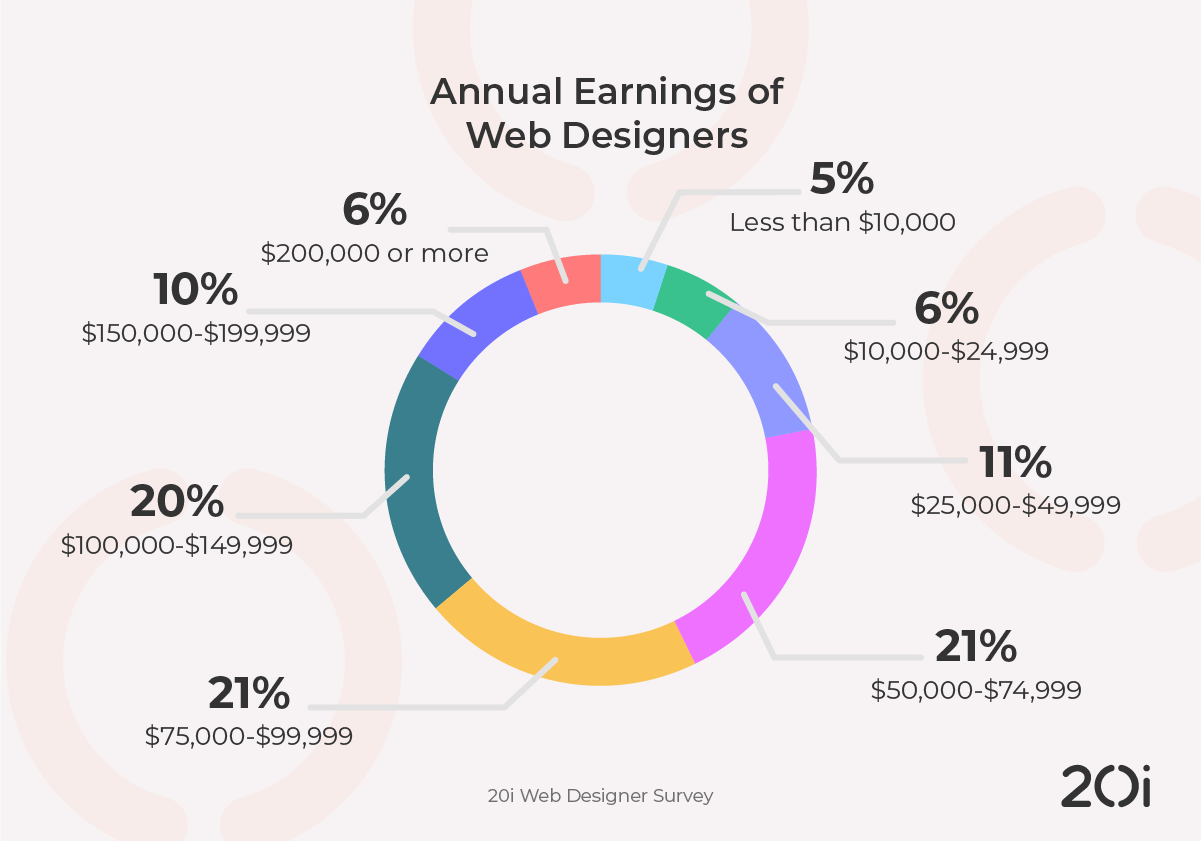
Web design incomes show a broad mid-to-upper salary distribution, with most professionals clustered between $50,000 and $150,000 annually.
- 21% earn $50,000–$74,999
- 20.6% earn $75,000–$99,999
- 20.4% earn $100,000–$149,000
- 9.8% earn $150,000–$199,999
- 6.4% earn $200,000+
Over a third (36.6%) earn over $100,000 annually.
This challenges any assumption that web design is being commoditized into low-paid gig work.
There is clear earning power in the profession – especially for those in senior, specialized or entrepreneurial roles.
The 6.4% earning over $200,000 represents a distinct high-performing segment – including agency founders, business owners and senior strategic in-house leads.
Overall entry-level income remains modest, but experienced designers are commanding significant compensation.
Web Designer Market Value Index
Use our salary calculator to see how you compare to other designers in your state, plus gain insights in to what your customers are prioritising.
Designer Market Value Index
Compare your salary against 2026 industry survey data.
Do you feel properly compensated for your work?
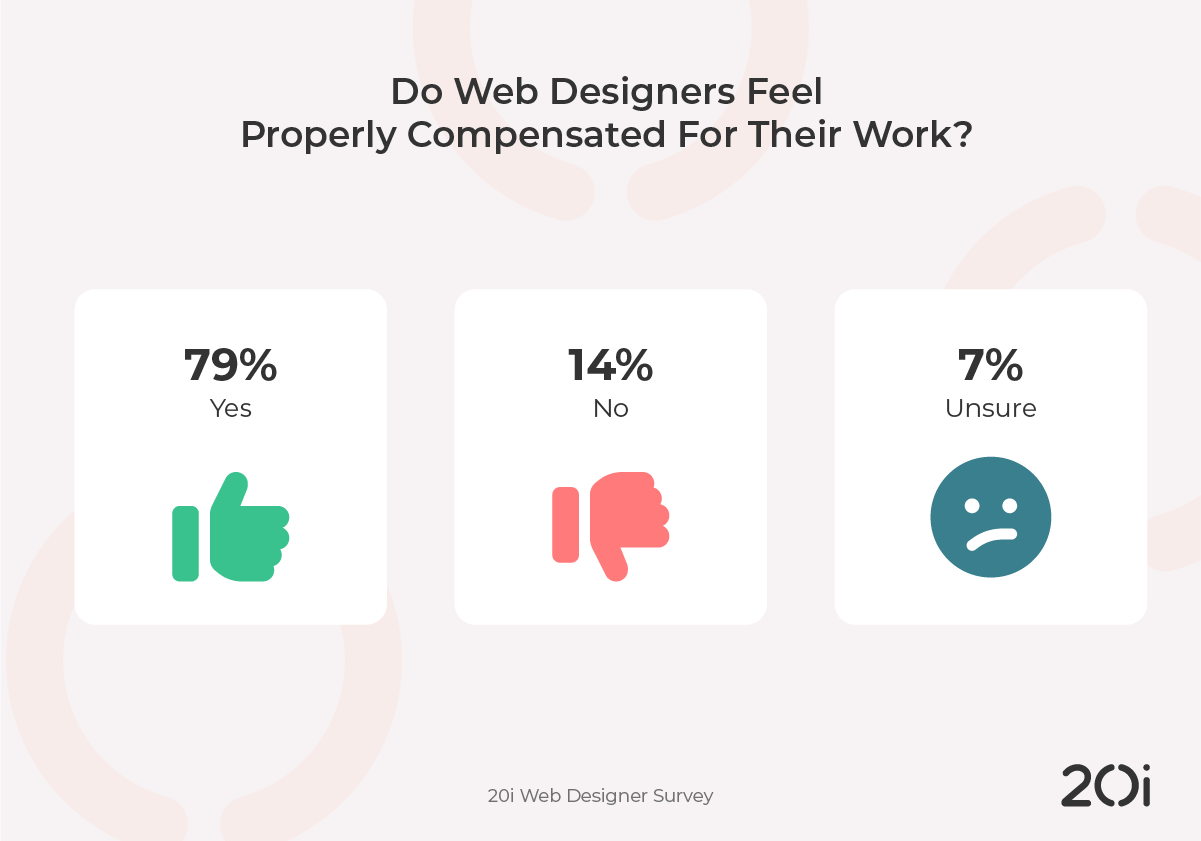
Perceptions of fair compensation among web designers are generally positive, with a clear majority reporting satisfaction with their pay.
- 78.6% said Yes
- 14.2% said No
- 7.2% were Unsure
Despite broader market pressures, nearly four in five designers feel fairly compensated.
This suggests that those securing work, particularly at mid to senior levels, are being paid in line with their perceived value.
However, design earnings and satisfaction vary sharply by age and region.
The $200k+ bracket is dominated by 35–45 year olds, yet the highest pay satisfaction is actually among 25–30 year olds earning $75k–$99k, suggesting expectations may matter as much as salary level for job satisfaction.
- California has a high proportion (85%) saying they feel properly compensated, despite the state’s high cost of living.
- Similarly, Floridians (45% earning over $100k) report 90% satisfaction.
- Texas stands out in particular as an interesting case study for how valuation of salary can differ by state: while only 22% earn over $100k, 87.5% feel properly compensated, indicating expectations and local economic context play a major role.
- At the top end of earnings, Massachusetts and New York show comparatively lower satisfaction levels (66.67% and 69.23%), implying that higher salaries don’t automatically drive stronger perceptions of fairness, especially in expensive cities on the East Coast.
- Meanwhile, states with the lowest proportions of six-figure earners – such as Missouri (11%) and Georgia (11%) – still report relatively high satisfaction (89% and 78%).
Overall, while higher income can support satisfaction, the data suggests perceived fairness is heavily influenced by regional norms, lifestyle costs, and salary expectations rather than pay level alone.
To what extent do you agree with the following statement? “Clients underestimate the true cost of web design.”
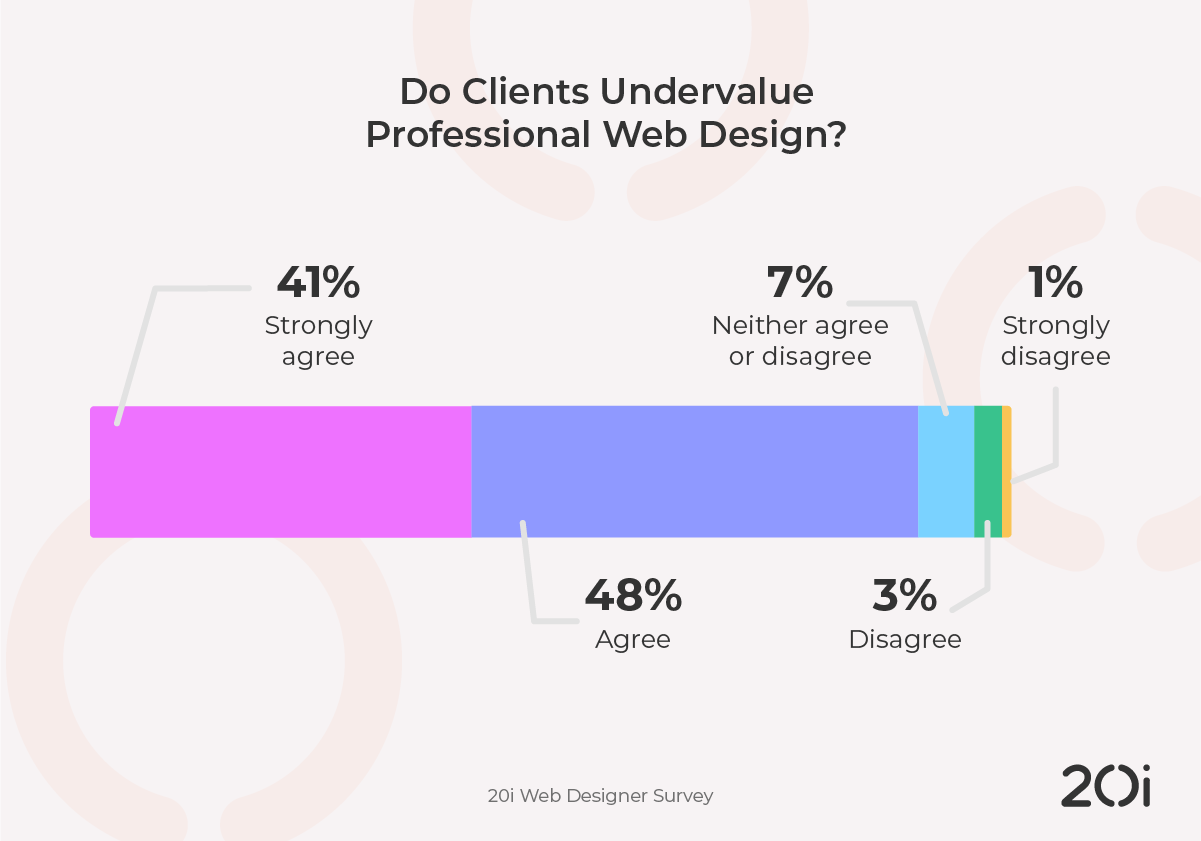
Designers were asked whether they feel clients don’t truly grasp the time, effort, and cost that goes into professional web design work.
- 41.2% said they strongly agree
- 47.8% said they agree
- 6.4% said they neither agree or disagree
- 3.20 % said they disagree
- 1.40% said they strongly disagree
Overall, an overwhelming 89% of web designers believe that clients underestimate the cost of web design.
This reveals an interesting tension across the landscape: designers feel paid appropriately overall, yet still believe clients undervalue the work.
This likely reflects negotiation fatigue, priorities from clients, and education gaps.
Designers may ultimately secure fair compensation – but often after explaining complexity, performance requirements, how long it takes to do good quality web design, security considerations, and long-term maintenance costs.
It’s important to note that our findings suggest the value gap is perceptual, not necessarily financial.
By age
This is the most unified response in the survey, showing near-universal alignment regardless of career stage. There is no meaningful generational divide in sentiment, designers in their 20s through to those over 55 share broadly the same perspective.
However, those aged 45-54 expressed the strongest conviction, with 79% in this bracket agreeing that clients underestimate the true cost of web design – suggesting that mid-to-late career professionals feel this tension most acutely.
Geographically
New York, Florida and New Jersey recorded the highest proportion of “agree” and “strongly agree” responses, each at 75%.
Remote, hybrid or office? How designers actually work
We asked about work structure and daily reality, from remote and hybrid working models to how much time is actually spent designing.
This helps reveal how web designers balance client demands, collaboration, and creative work in today’s evolving workplace.
What is your primary working model?
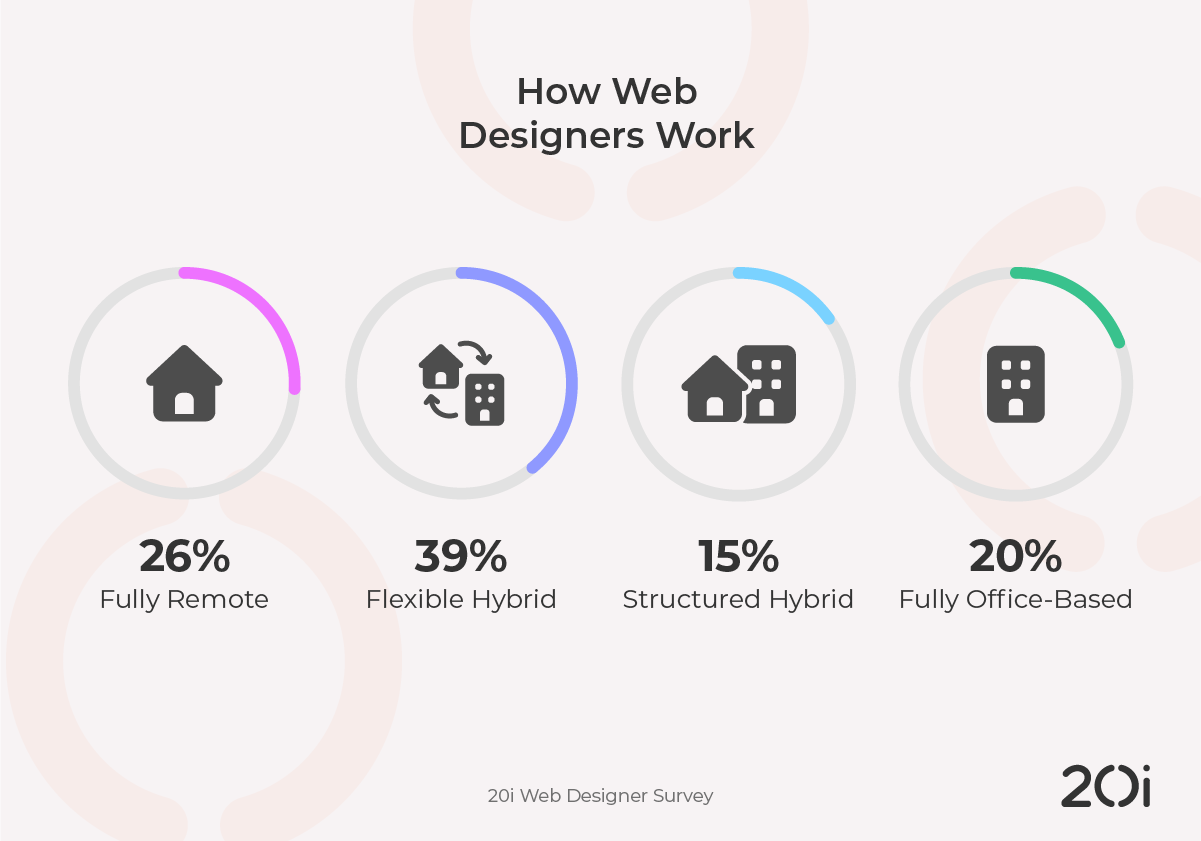
Respondents were asked about their working habits, to see if the “remote first” culture created during the pandemic had remained.
- 39% said they work flexible hybrid
- 26.2% said they are fully remote
- 19.4% are fully office based
- 15.4% use structured hybrid
Overall 65.2% operate either fully remote or with flexible attendance. For nearly two-thirds of web designers, the office is no longer a daily destination, but a resource used only when necessary.
By operating largely remotely or flexibly, it’s not just employees that benefit, it’s agencies too. They’re no longer restricted to localized talent pools, which could have also stabilized pay nationwide.
A designer in a mid-market city can now command “tier 1” salaries if they work for a company based in San Francisco, New York, or even internationally, without relocating.
Web design has firmly settled into a flexibility-first model. However, nearly one in five remain fully office-based – showing that structured corporate environments still play a significant role.
The dominance of flexible hybrid (39%) suggests autonomy is now a core expectation of the profession.
Designers in their thirties appear to be the most office-averse group, with 36% working fully remote, suggesting that mid-career professionals are increasingly prioritizing flexibility over traditional office norms.
Early-career designers, aged 18–29, are not far behind, with 34% fully remote. By contrast, designers aged 50–59 are less likely to embrace fully remote work (29%), with hybrid arrangements becoming the preferred compromise, reflecting a generational shift in work preferences as life circumstances evolve.
State-level trends further illustrate this cultural pivot. Rhode Island and Mississippi report the highest fully remote rates (50%), indicating that even traditionally office-centric regions are adapting to flexible work models.
Hybrid arrangements dominate in Delaware (75%), Connecticut (60%), and California (53%), pointing to an acceptance of mixed working patterns as a mainstream approach.
Meanwhile, Kentucky (75%) and Alabama (63%) remain strongly office-based, highlighting pockets where traditional workplace expectations appear to remain.
How much of your time is spent actually designing vs other tasks (e.g. admin, client management, reporting)
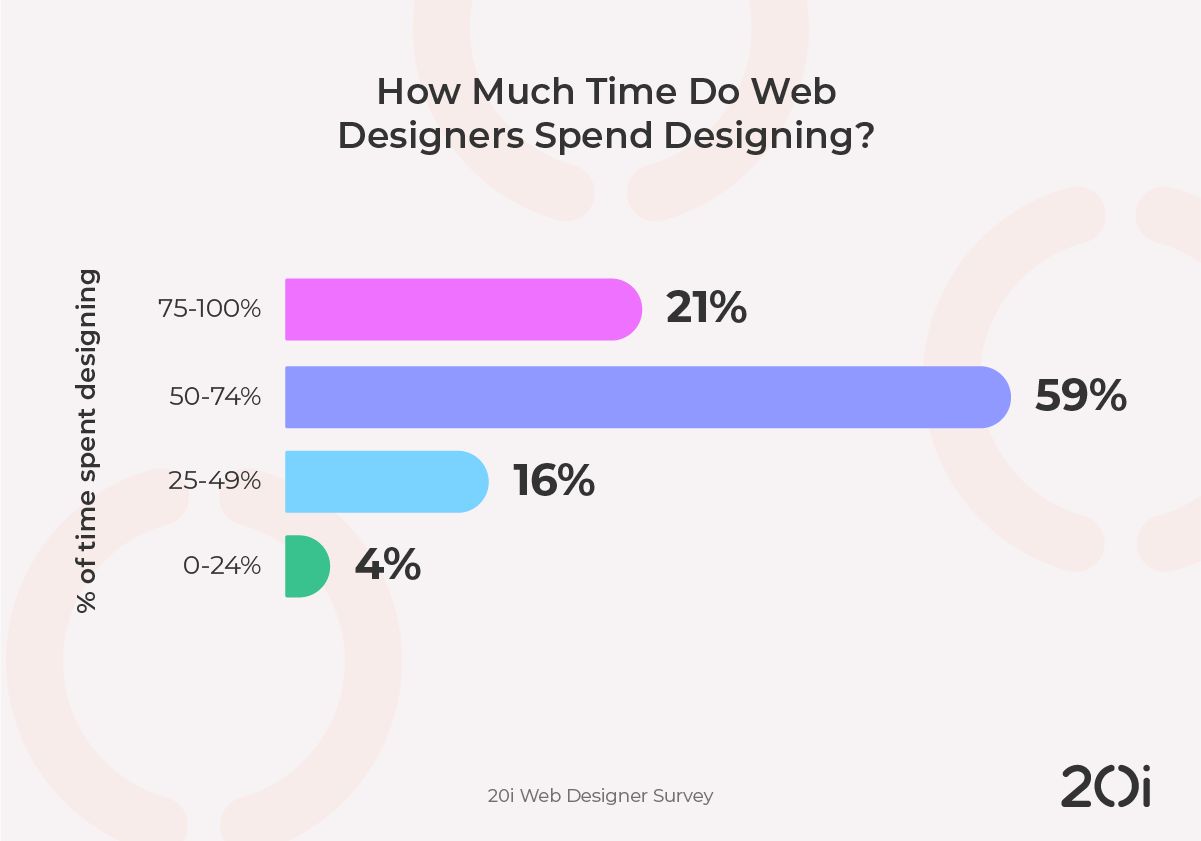
To get a better picture of day to day workflows, we asked participants to estimate how much of their time is spend actually designing, rather than admin or other work.
- 59% spend 50–74% designing
- 20.8% spend 75–100% designing
- 16.6% spend 25–49% designing
- 3.6% spend under 25% designing
As designers progress, just like in many other professions, their role expands beyond execution into client management, reporting, performance optimization, and team leadership.
Creative work does not disappear, but it can compete with operational responsibility.
The tech behind the creativity: tools and workflows
We asked web designers about the tools they use and how they manage their workflows to understand what powers their creativity and efficiency.
This sheds light on the software, processes, and strategies shaping day-to-day design work in the U.S.
What do you primarily use to create and deliver your designs?
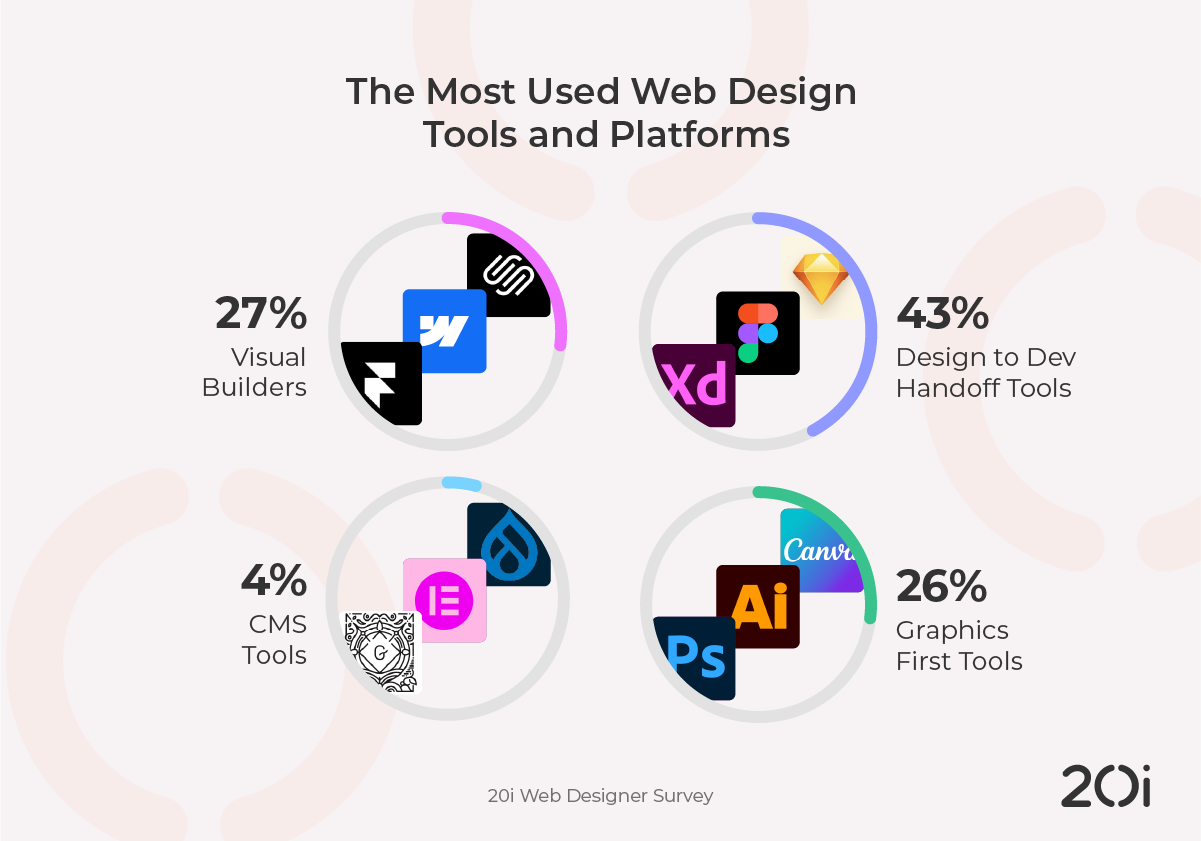
With more options available than ever, we wanted to find out the most popular toolsets.
- 42% said they use design-to-dev handoff tools
- 26.6% use visual builders
- 26.8% use graphics-first tools
- 4.2% use CMS block editors
Design-to-development platforms, visual builders, and graphics-first applications are among the most popular tools and software for web designers, helping professionals manage everything from prototyping to client delivery efficiently.
The leading category is design-to-development tools such as Figma, Adobe XD, and Sketch, confirming that structured handoff workflows remain the industry standard.
However, visual builders like Webflow and Framer now represent over a quarter of primary workflows, signaling increased appetite for faster deployment and designer-led publishing.
Graphics-first tools such as Adobe Photoshop and Canva remain widely used, particularly among freelancers and agency designers working on visual-heavy projects.
Only 4.2% rely primarily on CMS block editors, suggesting traditional content-first build workflows are losing dominance in favor of design-first systems.
By age
There’s a clear generational and regional pattern in the US design workforce. Among younger designers (18–29), adoption is split fairly evenly between visual builders (30%), graphic tools (30%) and design-to-dev tools (35%), reflecting early-career flexibility and experimentation.
While older designers increasingly favor traditional workflows: 50–59-year-olds lean heavily on graphic work tools (55%), and 60+ even more so (60%), showing a gradual shift from experimental or integrated tools to tried-and-true design software.
By state
California leads in adoption of design-to-dev tools (53%), highlighting tech-forward, integrated workflows. In contrast, Ohio shows a strong preference for graphic work tools (70%), signaling a more traditional design approach. Maryland favor design-to-dev tools (60%), indicating a state-wide focus on bridging design and development efficiently.
How web designers find clients and win projects
Understanding how web designers win work and manage client relationships – from primary sources of new projects to what clients value most – reveals the dynamics shaping client expectations and how designers compete in a crowded market.
What is the primary source of new work for you or your company?
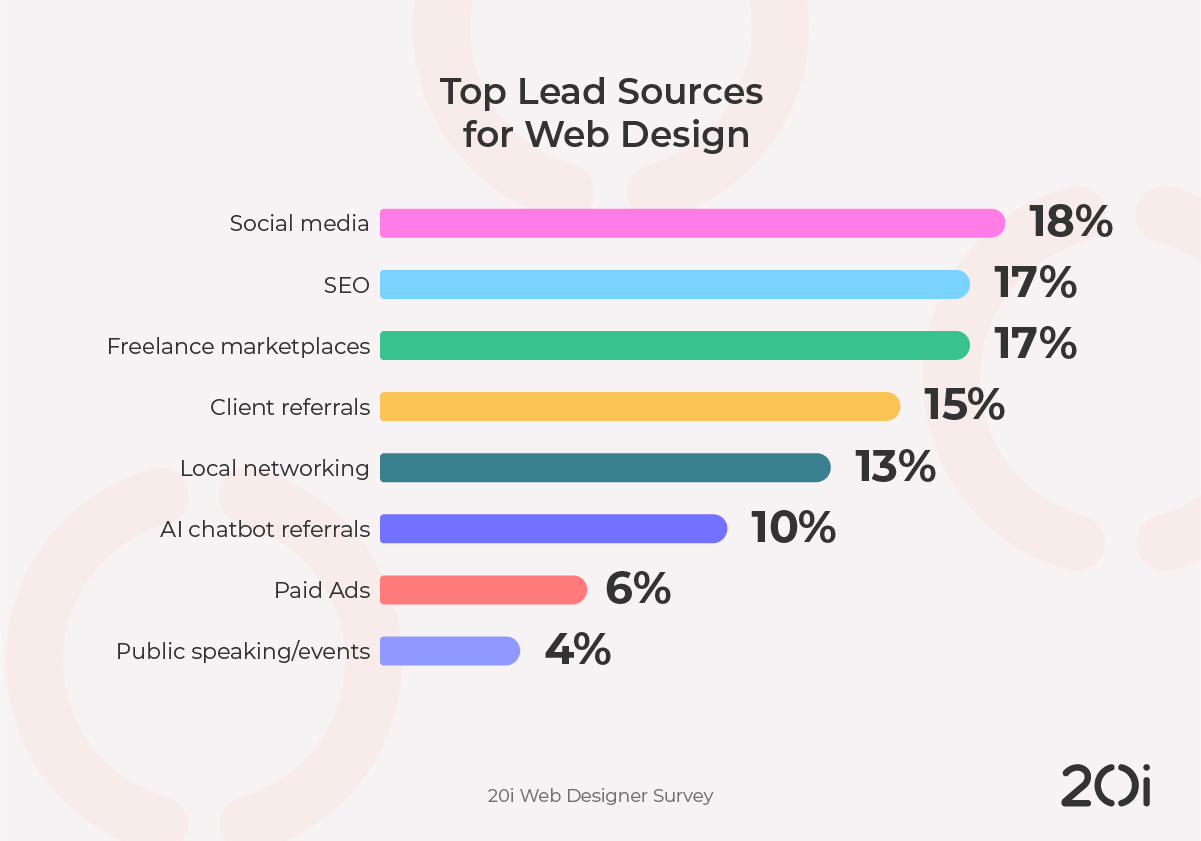
To get a picture of the evolving marketing landscape, we asked each designer for their number 1 source of new leads.
- 18% said social media
- 17% said SEO website leads
- 17% said freelance marketplaces
- 15% said referrals from former clients
- 10% said AI chatbot referrals
AI chatbot referrals count for almost one in ten referrals, signaling a new wave of AI discoverability for lead-gen.
While this might sound minimal compared to Google’s historical dominance, in the context of professional services, it’s a sign of a big change, as AI is essentially acting as a referral.
Recent data suggests that AI-referred leads convert at 4.4x the rate of traditional search.
The high percentage of marketplace leads suggests that clients still crave the security and standardized contracts these platforms provide in a remote-first world, while the slip of referrals to fourth place indicates that “word of mouth” has been digitized.
It’s clear that the “referral-only” monopoly that once defined the design industry is over. With social media (18.2%) and SEO (17%) also leading the pack, the market has transitioned into a visibility economy, where a designer’s public-facing digital footprint is more influential than their private network in many cases.
This creates a landscape where the most successful designers aren’t just craftspeople, but multi-channel authorities who maintain a presence exactly where the client’s intent begins.
From your experience, which of the following is most important to a client when beginning a project?
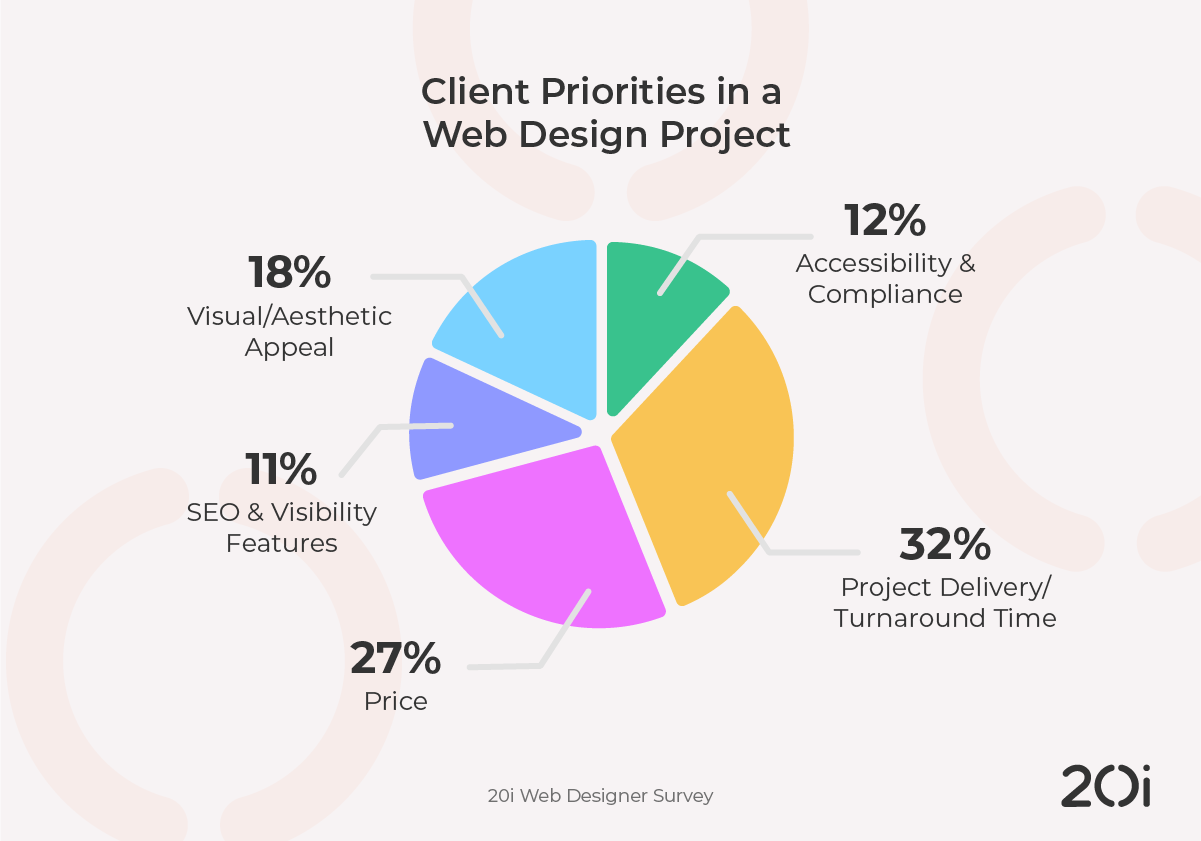
Drawing on their experiences, designers were split on what they believe clients prioritize when starting a design project.
- 32% said project delivery time
- 27% said price
- 18% said visual appeal
- 12% said accessibility
- 11% said SEO friendliness
Speed (32%) and cost (26%) dominate early client conversations, which could reinforce the value and perception gap that was identified earlier.
When timeline and budgets take center stage, creative and technical quality risk being framed as negotiable variables that can be compromised at the mercy of speed, rather than core value contributors.
Interestingly, SEO ranks lowest (10.8%), which may reflect both clients underestimating its long-term impact and designers not being perceived as the go-to experts for SEO.
Designers often balance immediate client urgency with advocating for strategic best practice, needing to shift conversations from “fast and cheap” to “sustainable and impactful.”
The biggest challenges web designers face today
From budget constraints to unrealistic client expectations, competition from AI and automation, we explored the challenges web designers have faced over the past year.
Finding high-quality new clients has been challenging for my business in the last year
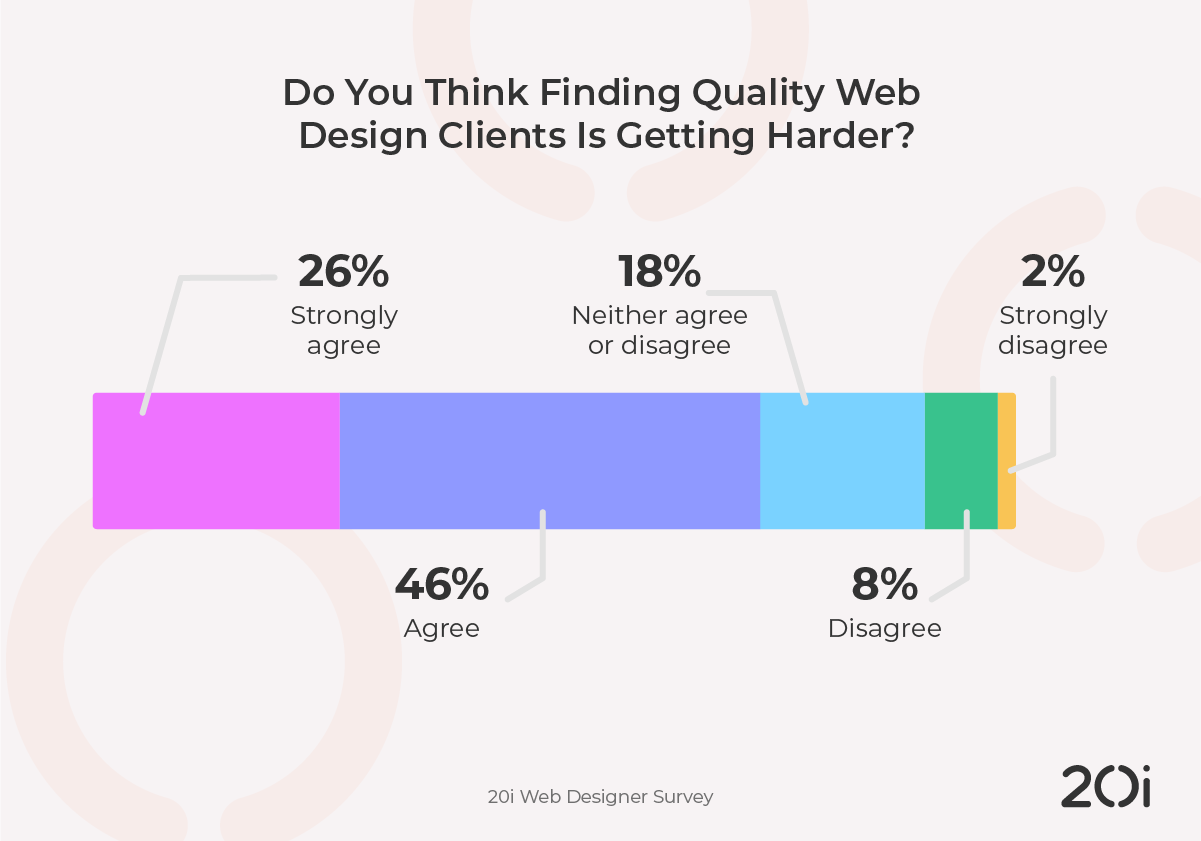
A striking 72.4% of respondents agreed that acquiring high-quality clients has been challenging. This underscores a highly competitive environment, where standing out is increasingly difficult.
Differentiation is harder than ever, particularly as AI tools lower entry barriers and allow new entrants to offer services that were previously specialist or resource-intensive.
In this context, winning new clients is not just about capability but also about perceived expertise, reputation, and the ability to communicate unique value.
Businesses are therefore navigating a market where volume of opportunity may remain, but quality clients that align with pricing, strategy, and long-term potential may be harder to secure.
This points to a growing need for targeted positioning, strong brand narratives, and selective client engagement strategies rather than broad acquisition efforts.
Declining or limited budgets have been challenging for my business in the last year
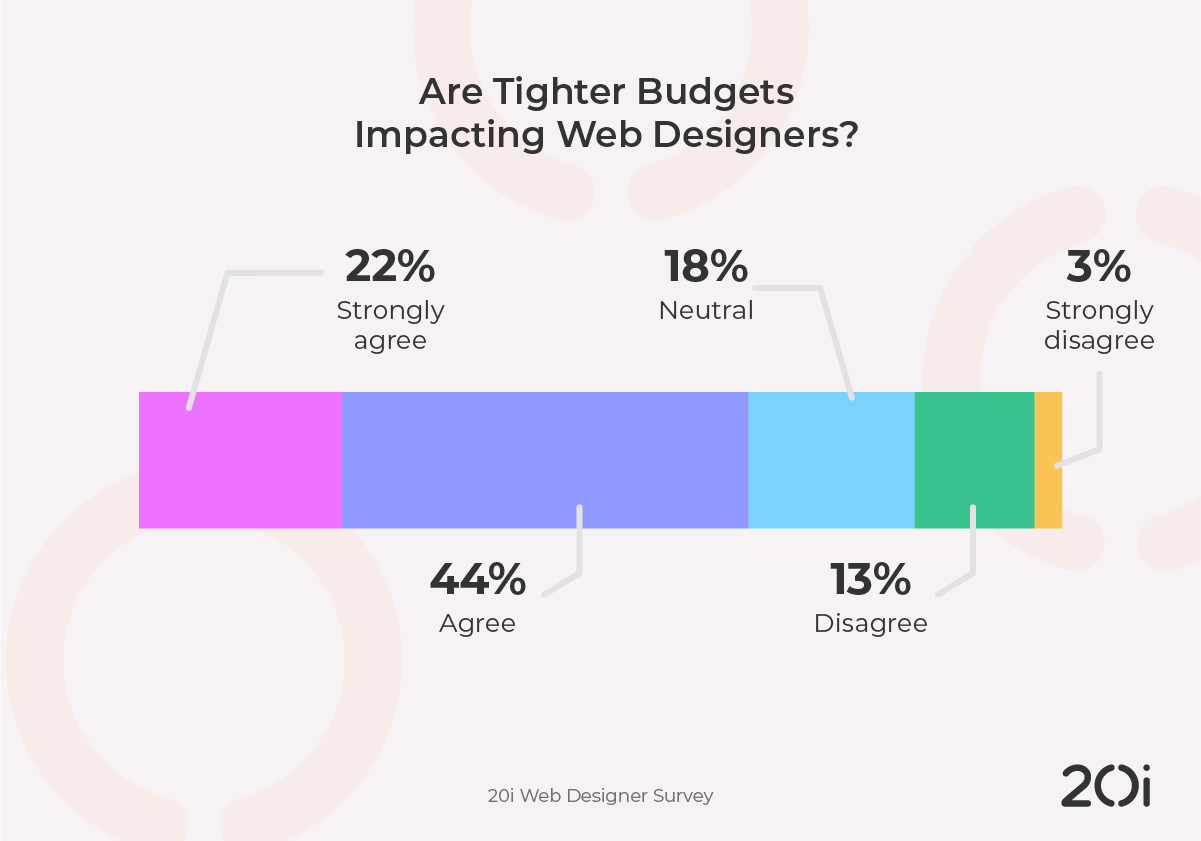
66% of respondents agreed that declining or limited budgets have been a challenge, reflecting increased pressure on pricing and scope, as clients increasingly expect more value for less investment.
Businesses are navigating a market where financial constraints amplify the tension between delivering high-quality work and meeting client demands, making careful prioritization and clear communication of value more critical than ever.
Managing unrealistic client expectations has been challenging for me in the last year
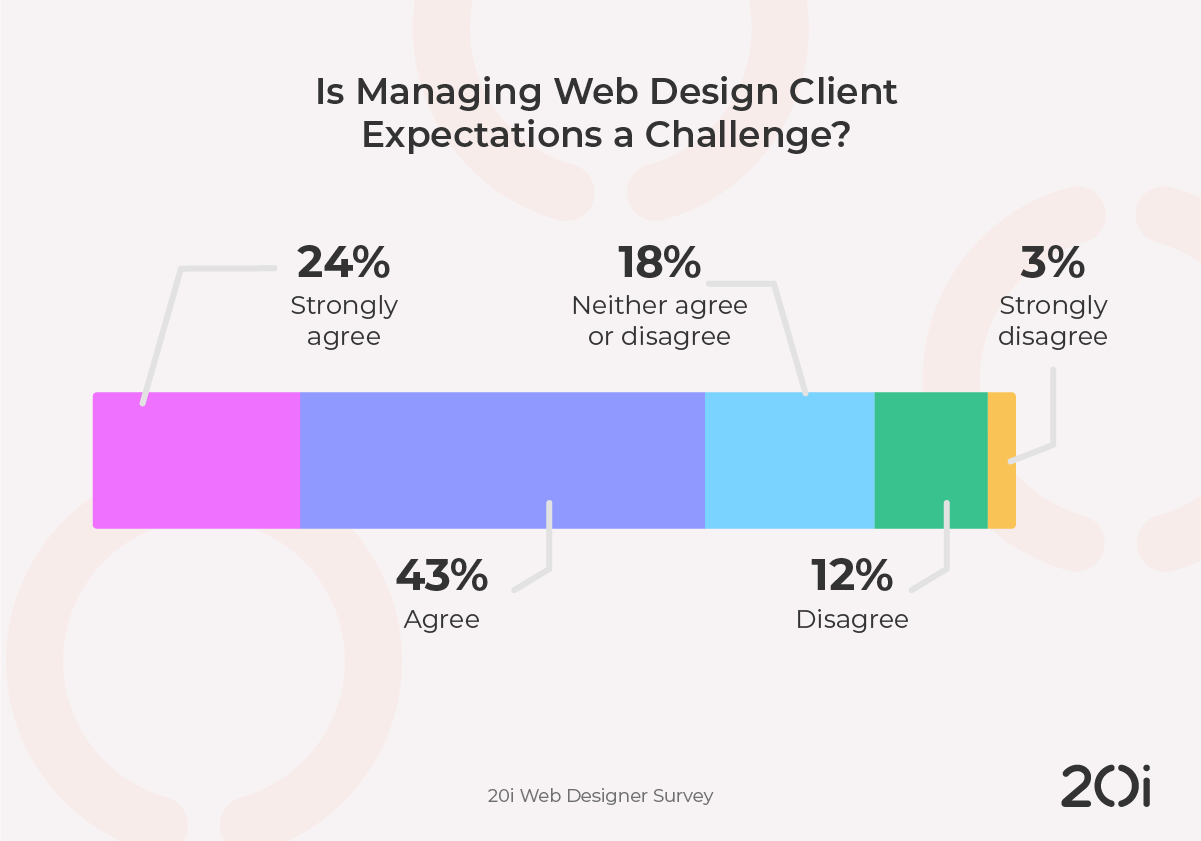
Two thirds (66.6%) of respondents agreed that managing client expectations has been difficult. One contributing factor may be the rise of AI-generated promises – such as “instant websites” or automated content solutions – which are reshaping client assumptions about effort, timelines, and what’s realistically achievable.
Businesses now face the dual challenge of delivering high-quality work while recalibrating client perceptions, making clear communication, education, and setting realistic scopes more critical than ever.
Increased competition from AI software and automated tools has been challenging for my business in the last year
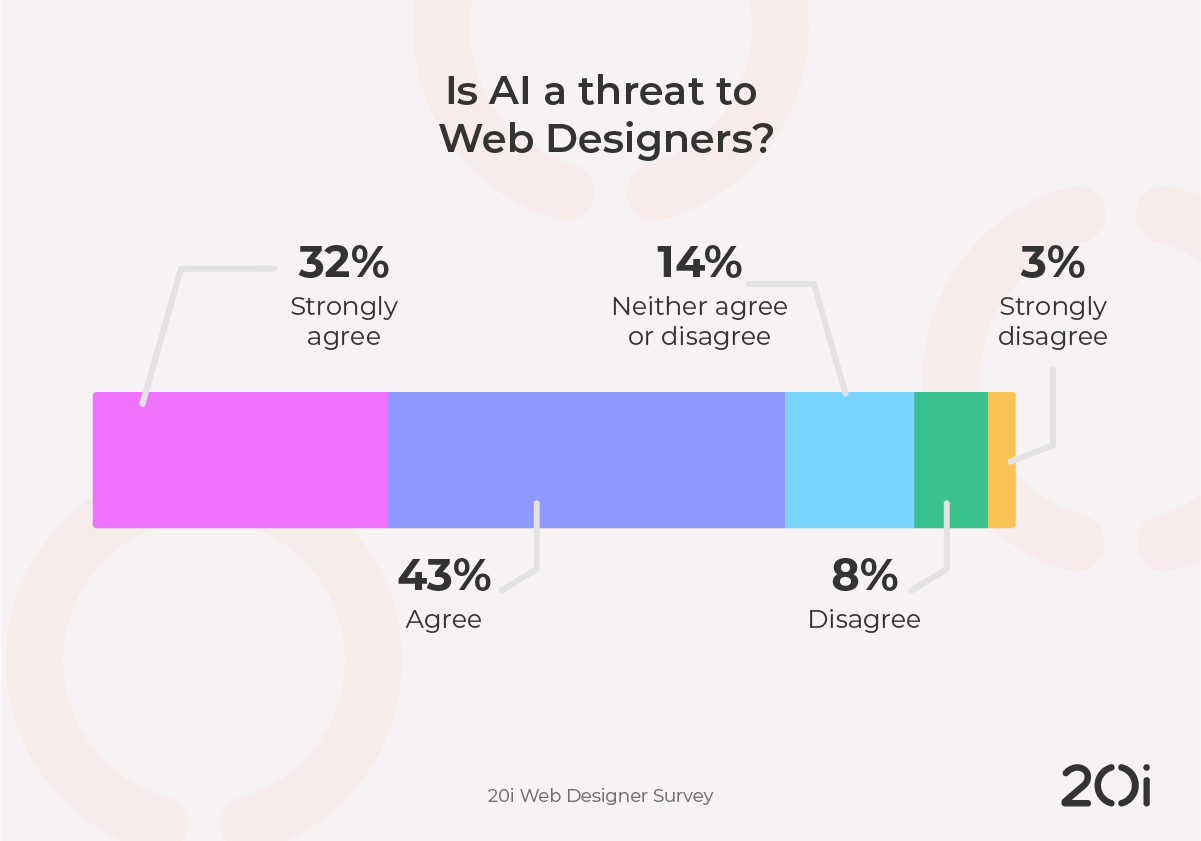
A striking 75.4% of respondents agreed that AI-driven competition has been a challenge, making it the single most significant operational pressure faced over the past year.
Unlike hypothetical concerns, AI is already reshaping competitive dynamics, influencing client expectations, pricing benchmarks, and perceived value.
Businesses are having to adapt not just to the capabilities of AI tools, but to the changing perceptions these tools create, where clients may assume faster, cheaper, or more automated solutions are standard.
Lack of clear career progression has been challenging for me in the last year
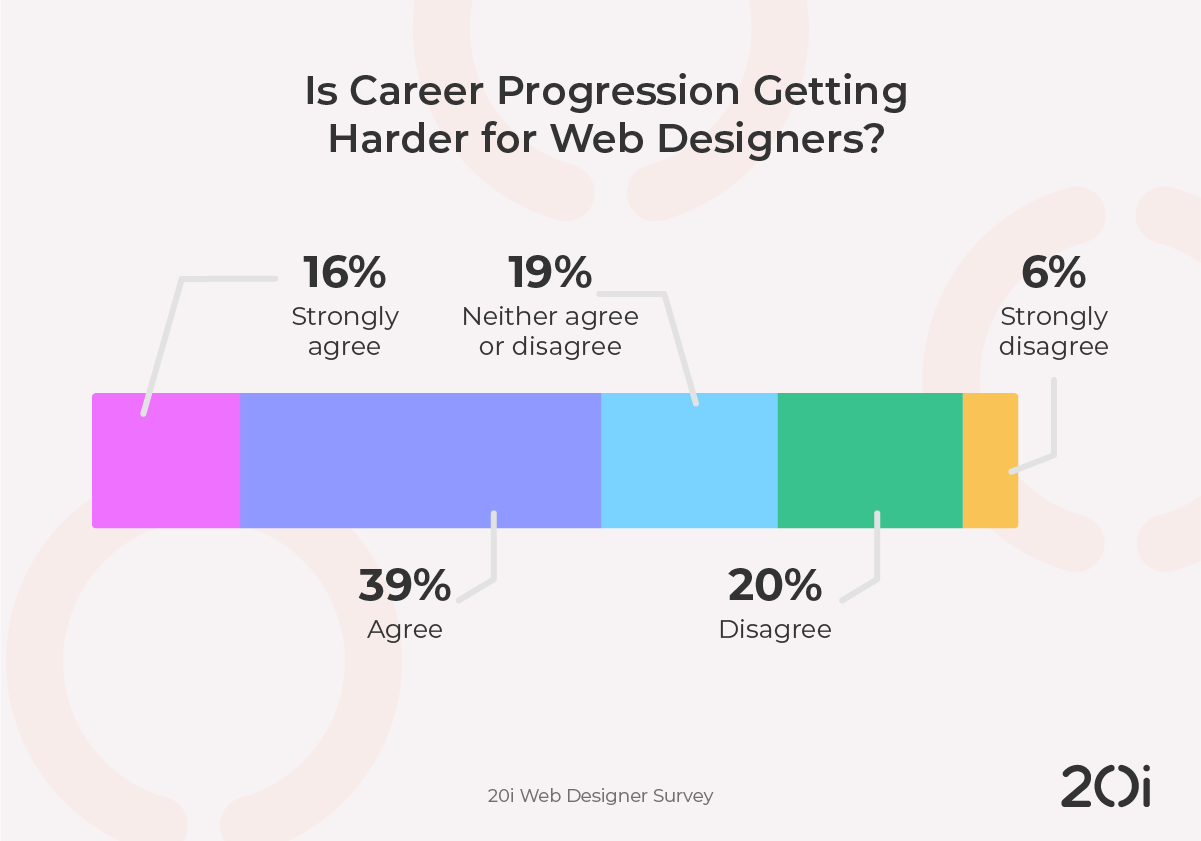
54.8% of respondents agreed that unclear progression has been a challenge. This is particularly clear for freelancers and mid-level designers, who often lack the structured advancement pathways found in traditional corporate careers.
Without clear visibility on promotion, skill development, or long-term opportunities, individuals may struggle to plan their growth or feel confident in investing in their current roles.
This highlights a broader need for businesses to define and communicate transparent career frameworks, even in more flexible or project-based environments.
AI, AR, and Automation: The Future of the Industry
So much has shifted in just the past year, from the rapid rise of AI tools to changing client expectations and new ways of working. If that’s the pace of change now, what could the next decade hold?
Designers shared their views on the technologies, pressures, and opportunities most likely to reshape the web industry over the next 10 years, and how AI will impact web designers, offering a forward-looking perspective on where the profession is heading.
What is your biggest concern about the future of the web design industry?
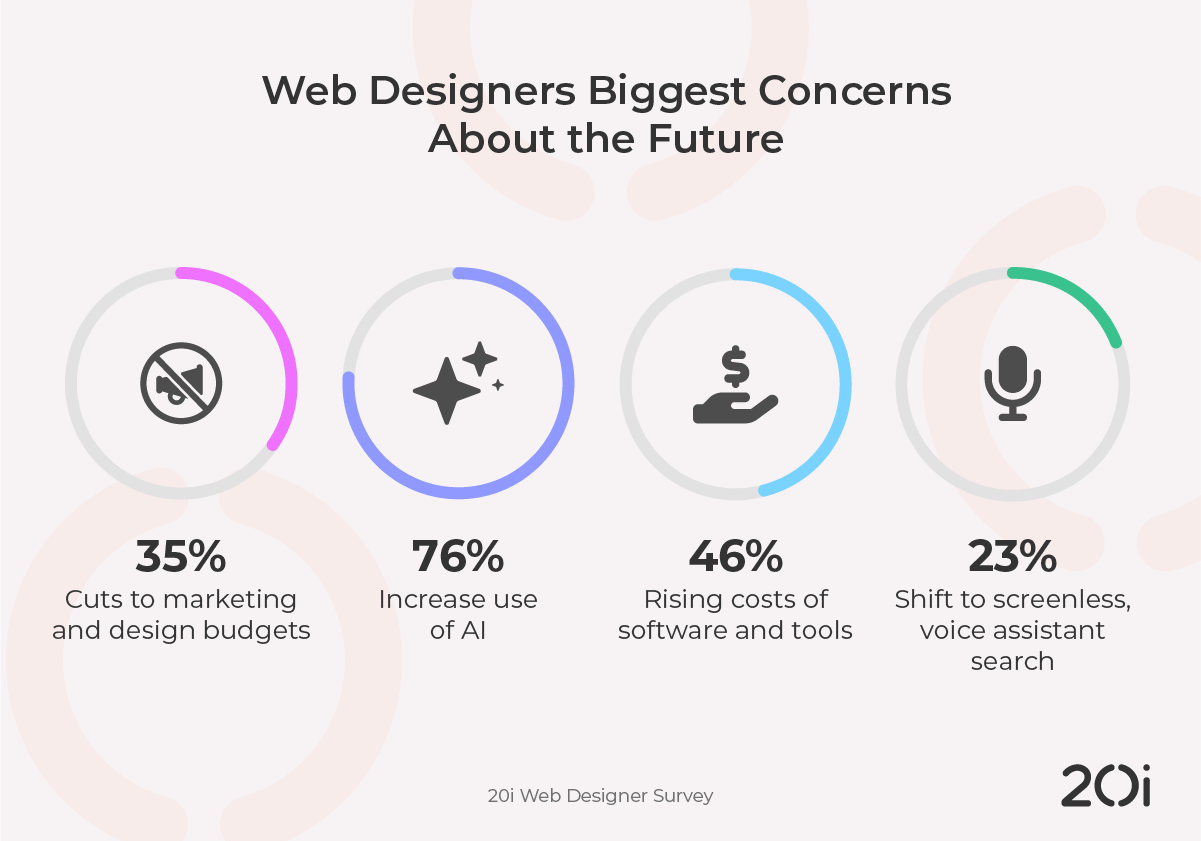
Respondents were also asked which emerging trends or pressures they believe will shape the future of the web design industry.
- 76% said increasing use of AI
- 46% the rising cost of tools & software
- 35% cuts to design and marketing budgets
- 23% the shift to voice and screenless search
AI emerges as the dominant concern by a substantial margin, reflecting how deeply it is perceived to be reshaping competitive dynamics, client expectations, and operational workflows.
While rising costs and budget constraints remain important, the scale of concern around AI underscores its central role in shaping both the present and future landscape of the industry.
Would you be willing to move to a different city or state for better industry opportunities?
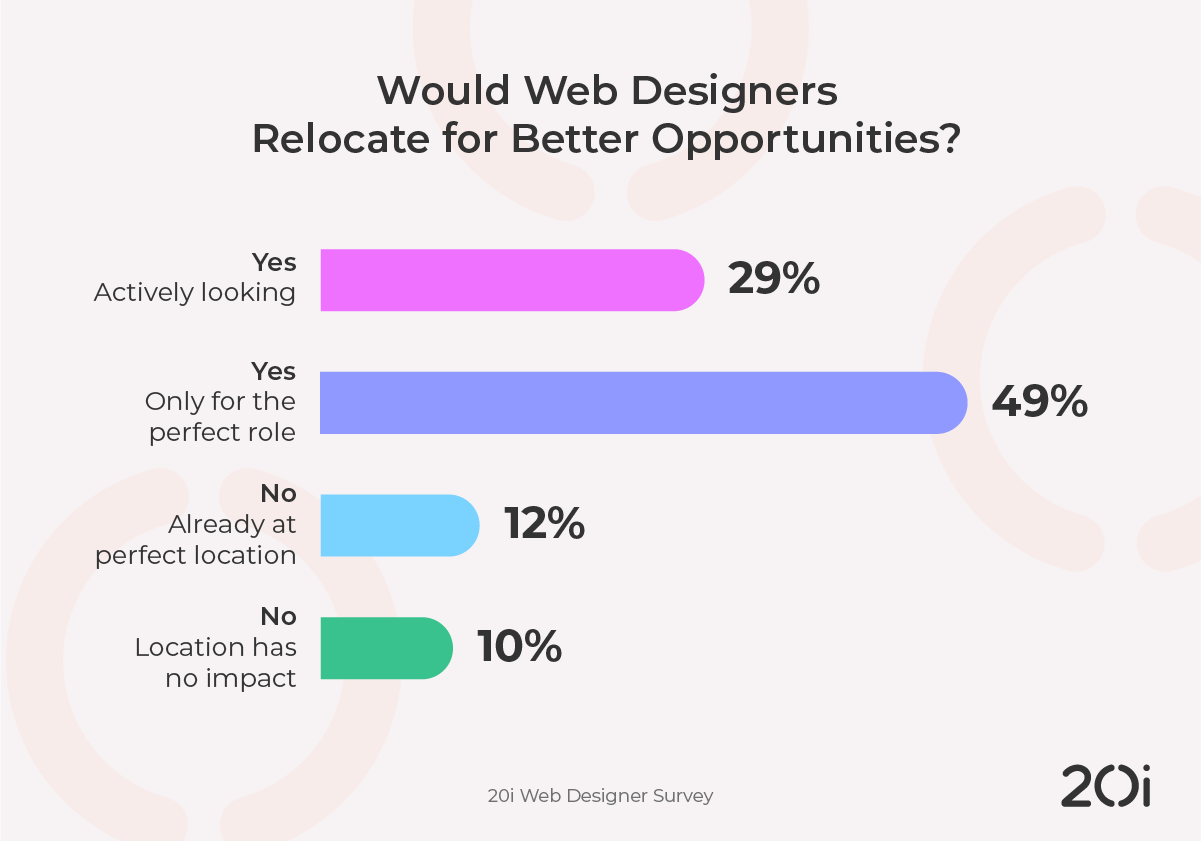
77.8% of respondents said they would move for the right opportunity. Despite the rise of remote work, traditional tech hubs and high-value roles continue to exert a strong pull, suggesting that geographic location still plays a key role in career advancement and access to premium opportunities.
This highlights the enduring importance of talent clusters and regional ecosystems in shaping industry mobility and career trajectories.
Over half (55–60%) of designers under 35 are willing to relocate for better opportunities, compared with just 10% of those over 50, which is unsurprising.
Designers in smaller or mid-sized states like Alabama, Missouri, and Minnesota are the most mobile, with 83–100% open to relocating.
Large hubs like New York, California, and Florida, 73–80% of respondents are willing to move for better opportunities.
What do you expect to impact the web industry most in the next 10 years?
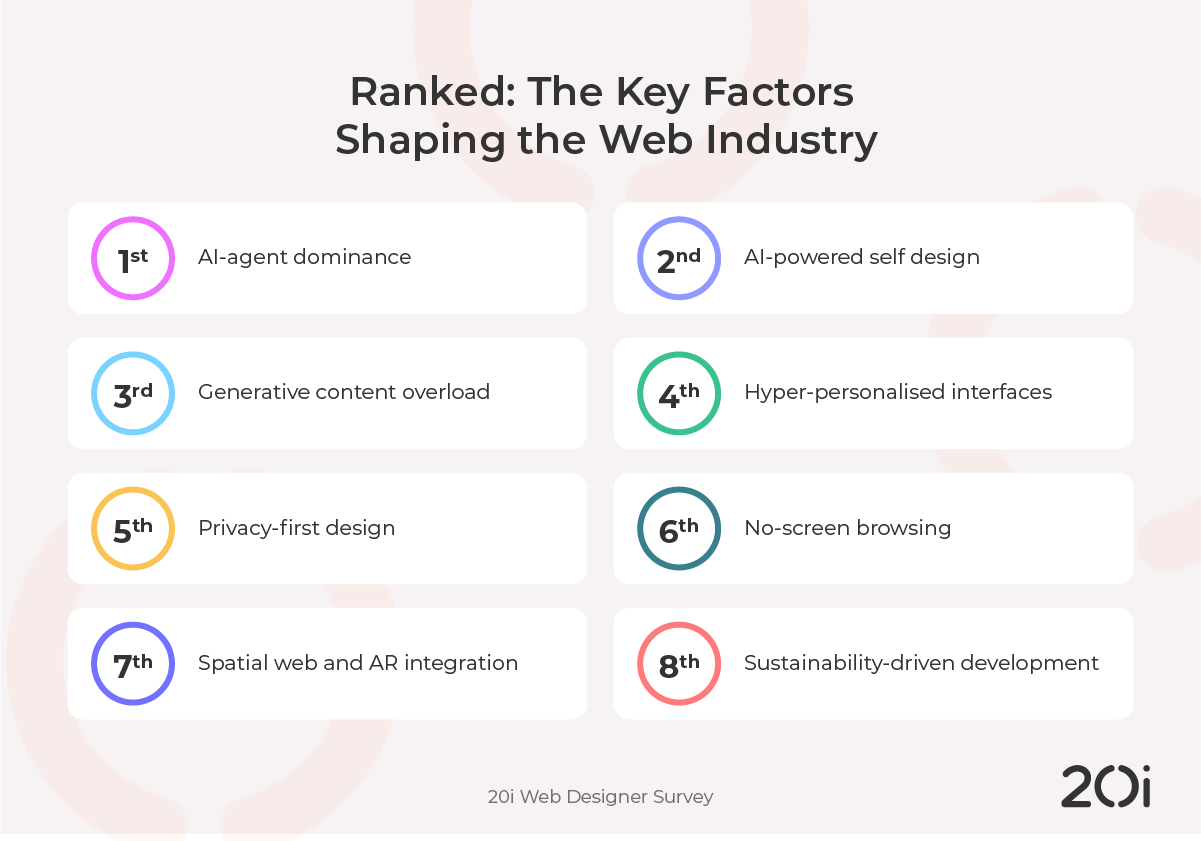
We asked respondents to rank the following factors from most to least important, with 1 representing the highest priority.
Below is how respondents believe these issues are most likely to impact the industry.
- AI-agent dominance
- AI-powered self design
- Generative content overload
- Hyper-personalized interfaces
- Privacy-first design
- No-screen browsing (voice and thought-based navigation)
- Spatial web and AR integration
- Sustainability-driven development
AI dominates the horizon, with AI-powered self-design and AI-agent dominance seen as the most transformative trends, reshaping workflows, creativity, and competition.
Generative content overload and hyper-personalized interfaces follow, highlighting challenges in differentiation and the evolution of user experience.
Emerging technologies – voice/no-screen navigation, AR/spatial web, and privacy-first design – are considered moderately impactful, while sustainability-driven development ranks lowest, suggesting environmental factors are currently a secondary concern.
Overall, the data shows that AI is expected to be the central driver of change, with content, UX, and emerging tech shaping adaptation, and sustainability remaining a longer-term consideration.
In Focus – How the “Big 4” Compare
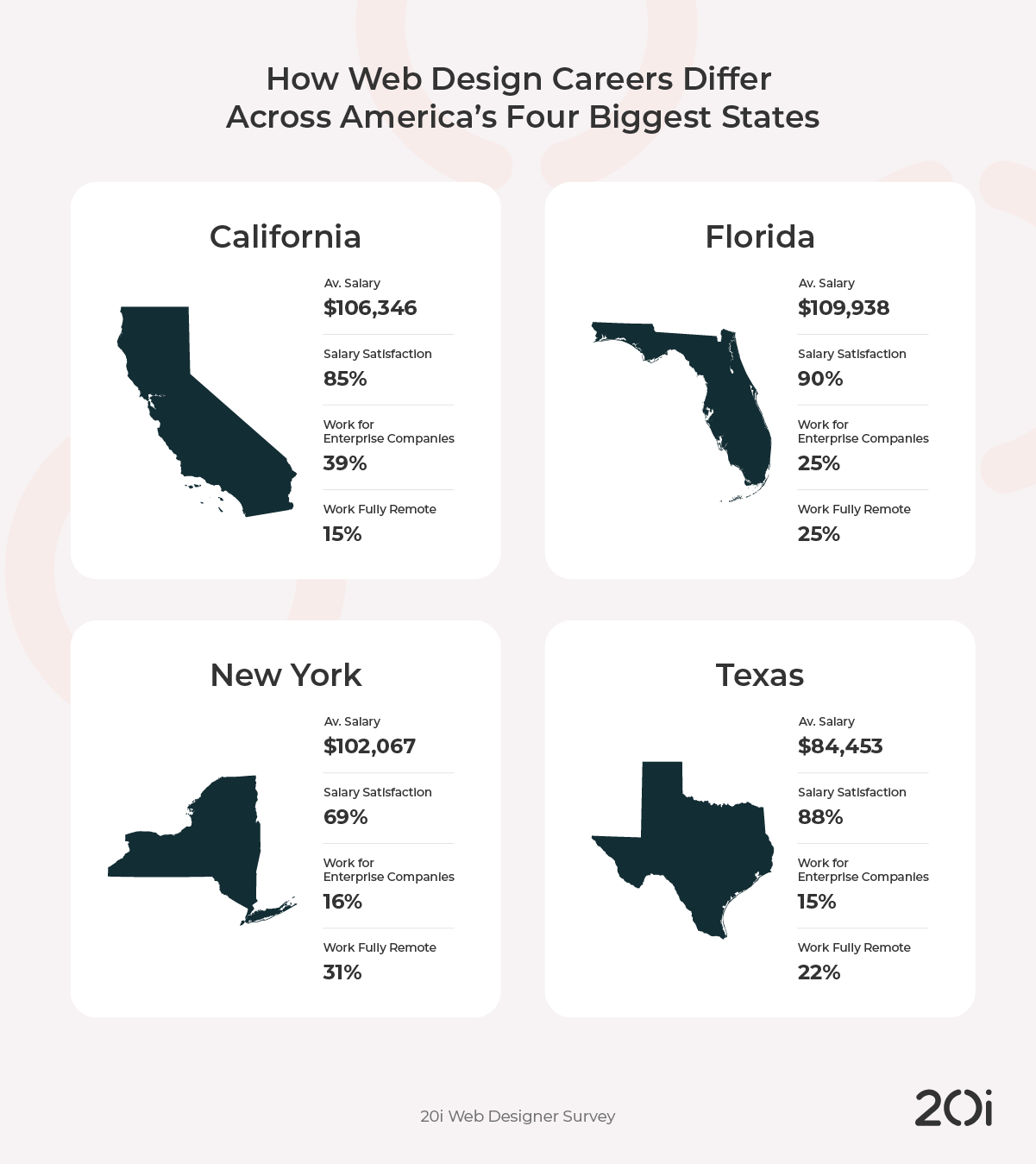
Whilst we received responses from web designers across the continental US, California, New York, Florida and Texas provided more respondents than any other states.
As major centers of population, economy and culture, comparing this “Big 4” highlights clear contrasts in earnings, satisfaction and experience levels.
Web designers in Florida reported the highest average earnings at $109,938, narrowly ahead of California at $106,346 and New York at $102,067.
When it comes to the very highest earners, however, the West Coast remains dominant, with California recording the greatest number of respondents earning over $200,000.
Texas lagged behind the other three states in average salary at $84,453 yet reported the second highest level of salary satisfaction at 88%, compared to just 69% in New York.
This disparity may partly reflect cost of living differences, but also the composition of the workforce in each state.
Texas stands out demographically, with the highest share of early career designers with one to three years of experience, predominantly aged 18 to 28. This concentration of early-stage professionals likely contributes to the lower average salaries, while Florida and New York host a greater proportion of experienced designers with higher earning power.
The next decade of web design
Despite challenges like budget pressures, client expectations, and competition from AI, designers are adapting rapidly.
They’re embracing new tools, workflows, and hybrid working models that allow them to be more creative, efficient, and responsive than ever.
The widespread adoption of AI, generative content, and hyper-personalized interfaces points to a decade of innovation where designers can focus on high-value creative work while automating repetitive tasks.
At the same time, the willingness of designers to relocate or engage with new opportunities shows that talent remains flexible and ambitious, ready to drive growth across industries and markets.
Emerging trends such as privacy-first design, AR integration, and sustainability-focused development highlight how the profession is maturing, balancing technical excellence with ethical and user-centered approaches.
For designers and agencies, having reliable infrastructure is key to seizing these opportunities. A strong web hosting platform – whether that be for Reseller Hosting, WordPress Hosting, or Managed Cloud Servers – provides the scalability, security and flexibility needed to deliver projects efficiently and experiment with new technologies without worrying about backend limitations.
Methodology
20i surveyed 500 web design professionals in the United States on all 19 questions, using Pollfish survey platform. Data correct as of February 2026.
Great article, totally US based survey not relevant to the UK market